
Lake Oswego survey: 95% rate city a good place to live; economic development tops residents’ priorities
Get AI-powered insights, summaries, and transcripts
Subscribe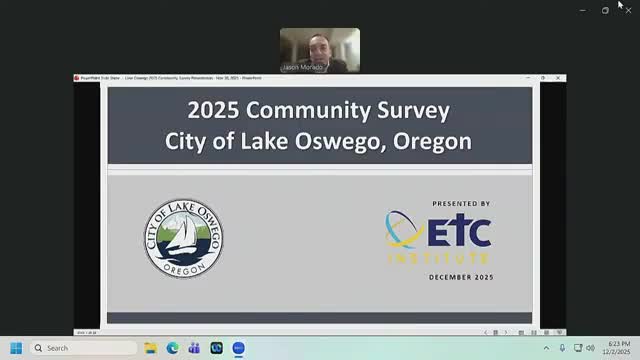
Summary
A statistically valid ETC Institute survey presented to the council found 95% of respondents rate Lake Oswego as an excellent or good place to live; residents named economic development, public safety and development services among top priorities, and the city plans follow-up benchmarking and targeted outreach.
A statistically valid community survey presented Tuesday showed overwhelming resident satisfaction with life in Lake Oswego and flagged priorities for the council as it sets goals for 2026. Jason Marado, director of community research at ETC Institute, told the council that 95% of the 400 randomly sampled respondents rated the city as an excellent or good place to live.
The survey, which used a mail-and-online random-sample methodology and reached 400 completed responses (margin of error ±4.9 percentage points at the 95% confidence level), also found that residents rated the city above the regional and national average across measured service areas. "You rated above the U.S. average in all 27 areas that we compared," Marado said.
Why it matters: Councilors said the results will shape the city’s coming goal-setting and communications. The survey identified economic development, public safety, development services, sustainability and equity as the top issues residents want the city to emphasize over the next two years. The city will use those priorities in budget and program planning and will share the full report with boards and commissions as part of summit materials.
Key findings included a steady improvement in satisfaction since the first ETC cycle in 2021: 56 of 95 measured areas increased since 2023, and 24 areas showed a significant increase. Marado highlighted a few notable items: overall quality of city services and customer service by city employees rated far above national averages; the city’s satisfaction increases included climate response and police responses involving people with cognitive or mental challenges. The areas with the largest decreases were the public library facility and economic development (down seven percentage points from 2023), though both remained positive overall.
Council response was largely positive and practical. Mayor Buck said staff will use the survey when shaping council goals, and staff confirmed the full report — including results from the 157 additional voluntary responses — will be distributed to advisory bodies next week. Several councilors asked for additional benchmarking versus similarly sized, demographically comparable cities, not just regional and national averages, to better understand where Lake Oswego stands among peer communities.
What’s next: Staff will include the survey in the upcoming summit package, commission members will receive the report for review, and councilors asked for follow-up analysis on development services to understand whether the lower rating reflects counter/service delays, perceptions about new development, or state-level changes affecting local outcomes.