Get Full Government Meeting Transcripts, Videos, & Alerts Forever!
Get email alerts on the Ensley Lane Rebuild topic
No spam. Unsubscribe anytime.
Neighbors prevail: Board denies Ensley Lane rebuild exception after residents cite loss of trees and neighborhood character
Summary
The board denied an exception for a proposed 5,314 sq ft teardown/rebuild on Ensley Lane after numerous residents said the design would be out of scale with Old Leawood and threaten mature trees; applicant reps said the plan responds to market and modern living needs.
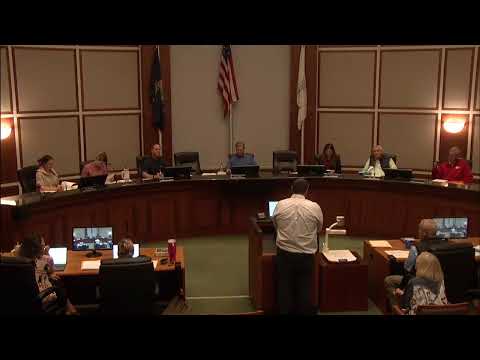
The Board of Zoning Appeals denied a property owner’s request for an exception to the City’s maximum allowable square footage for a teardown/rebuild at Ensley Lane (Case 53-20258721) at its Oct. 22 meeting after an extended public comment period.
The request and the numbers: Staff reported the proposed teardown/rebuild would total 5,314 square feet, exceeding the LDO maximum of 4,536 square feet by 778 square feet (under the 20% threshold that classifies the request as an exception rather than a variance). Applicant representatives, including Eric Robinson, said the plan would provide four bedrooms and more usable second‑floor living space; architect Weston (ESC Architects) said the design sought to match features of nearby new homes.
Neighbors’ concerns and testimony: Dozens of neighbors attended and several spoke in opposition, citing loss of mature trees, change to the neighborhood’s scale, and a preservation study the neighborhood commissioned in 2011. "We moved to this neighborhood 29 years ago because of the green space and all the trees," said Rex Joyce (8731 Ensley Lane). Jay Denfeld, representing neighbors near the property, cited the preservation survey and said: "This house is gonna be 98% larger than the median square footage house that exists," arguing the rebuild would be out of scale with surrounding dwellings. Multiple residents warned that repeated exceptions could set a new norm for larger houses in the historic district.
Applicant response: Architect Weston and representative Eric Robinson said the proposal responds to current market expectations and that some of the square footage included covered patios and garage area; Robinson told the board there was an interested buyer though not yet under contract. Weston said the design attempts to reflect surrounding architecture and that the new house would in some dimensions be farther from immediate neighbors than the existing structure.
Board deliberation and outcome: Board members reviewed the two criteria for an exception (the request being under 20% and whether the proposed size "reflects the character of the other surrounding dwellings in the neighborhood") and listened at length to neighbors who said the plan did not reflect that character. After discussion, a motion to deny the exception carried by voice vote; the board ordered that written notification of the decision be sent to the applicant.
Why this matters: The decision underscores the local tension between property owners’ ability to build to ordinance limits and neighbors’ efforts to preserve historic neighborhood character, tree canopy and streetscape. The board noted its limited authority: it cannot limit builds to sizes below the ordinance maximum, but it can deny proposals that exceed the limit if they do not meet the exception standard.
What’s next: The denial will be issued in writing; applicants may revise the design to fit within the LDO or seek alternative proposals that better demonstrate consistency with surrounding character.
Representative quotes from the hearing: "We moved to this neighborhood 29 years ago because of the green space and all the trees," — Rex Joyce, resident near the site. "This house is gonna be 98% larger than the median square footage house that exists," — Jay Denfeld, resident and neighbor advocate. "We don't intend to ruin it; we would like to contribute to it," — Eric Robinson, representative for the property owner.
The board adjourned after completing its agenda and directing staff to notify applicants in writing.