Get Full Government Meeting Transcripts, Videos, & Alerts Forever!
Get email alerts on the Water Rates topic
No spam. Unsubscribe anytime.
Long Beach officials defend water and sewer rate increases as residents push back
Summary
City Manager Dan Creighton told the council that deferred maintenance and a depleted water fund forced rate increases; residents said bills are unaffordable and asked for clearer explanations and individual bill reviews.
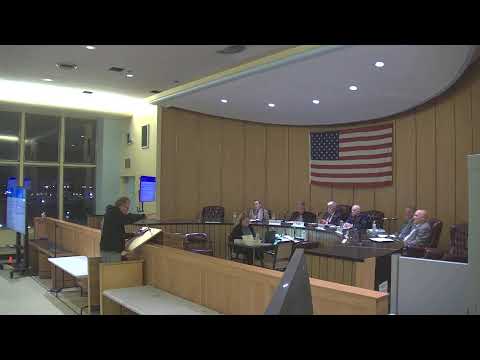
City Manager Dan Creighton told the Long Beach City Council on Oct. 21 that the city’s water and sewer rates had to rise because the dedicated water fund was sharply reduced and the system had been running at an unsustainable deficit. “The water fund balance was decimated from a high in 2021 of almost 1,900,000 to a paltry $355,000,” Creighton said, and the plant previously “operated at a deficit of $1,200,000.”
Creighton said bills are issued quarterly and combine water and sewer charges measured by the same meter. He said water and sewer funds are restricted to their respective operations and cannot be used to cover general fund costs, and he listed deferred capital needs — filter replacements, water main replacements, new well repairs and SCADA remote-monitoring upgrades — that he said made increases unavoidable.
The city manager walked through recent and projected average household charges: fiscal 2024 average $129.17, fiscal 2025 average $133 and a projected fiscal 2026 average $142.51. He summarized the change as a roughly 10.33% increase and said the average household’s total annual increase would be about $53.36. Creighton offered to have staff pull up any resident’s bills for a side-by-side, year-over-year comparison: “He will pull up your bill and compare year over year the numbers with you to verify what I’ve told you,” he said.
Residents at the meeting pushed back. Pamela Payton, who identified herself as a lifelong resident and a senior, said her quarterly bill had jumped “from around $200” to “almost $600” and described the change as “absolutely outrageous” for someone on a fixed income. Multiple speakers asked for clearer, mailed explanations and for the city to offer targeted assistance or review options for seniors and low-income households.
Council members and staff also disputed a widely circulated mailer and social-media claims that the city faced a $19,000,000 judgment or that water rates rose 41% when sewer decreases were omitted. President Finn said the council should “deal with facts and not made up numbers,” and Creighton and the controller emphasized that the sewer rate changes partially offset water increases on the combined bill.
The city said it had improved general-fund balances through recent tax revenues and conservative budgeting, a point Creighton used to argue that better prior fund management — not current decisions — left the water fund depleted. The council did not adopt new hardship or payment-assistance programs at the Oct. 21 meeting but staff committed to individual bill reviews and to continuing public outreach about how the combined water-and-sewer billing works.
Next steps: staff offered to meet with residents who want their bills examined and indicated that projected rates for fiscal 2026 will be included in upcoming budget materials and future public discussions.