Get Full Government Meeting Transcripts, Videos, & Alerts Forever!
Get email alerts on the Public Comment Fees topic
No spam. Unsubscribe anytime.
Residents press Middleton on connection fees, commercial discounts and fairness
Summary
Residents at a council workshop pressed staff about high connection and monthly sewer bills, meter sizing and whether one‑off discounts or general‑fund subsidies could attract commercial development without worsening rates; staff warned that inconsistent discounts can raise bond costs.
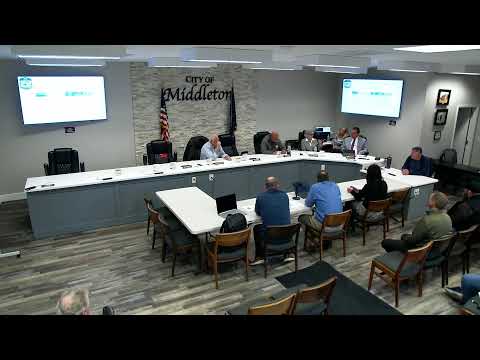
At a Middleton workshop on the wastewater program, several residents urged the city to make connection and impact fees predictable and competitive to attract commercial development while warning that rapid multi‑year increases create hardship for households.
John Reynolds, a resident who identified his address, asked whether a 1‑inch meter could support high‑flow plumbing fixtures and flagged confusion about whether judicial confirmation had added capacity into the first project. The city engineer, Amy Woodruff, and staff said the judicial confirmation covered the first project and a modest capacity increase to about 9,500 connections and reiterated that some additional capacity was required by regulatory planning assumptions.
Residents repeatedly asked whether the city could temporarily reduce commercial hookup fees to encourage business investment and whether such a policy would be acceptable to bond underwriters. Financial adviser speakers said the bond market views inconsistent or ad‑hoc discounts as an uncertain revenue stream that can increase borrowing costs. "If you start to discount and go outside of your current rate structure, it creates uncertainty," a financial adviser said, adding that a clearly defined alternate rate structure or short‑term, published resolution would be more credible to lenders than case‑by‑case waivers.
Other residents emphasized predictability. One attendee asked for a web tool so prospective buyers and developers could estimate impact fees up front, a suggestion staff said the building department is exploring. Several speakers framed the choice as a long‑term community decision: allow growth to lower per‑household costs through economies of scale, or remain smaller and accept higher per‑household bills.
The meeting closed with staff acknowledging the hardship and promising further analysis and formal rate recommendations once bids and bond terms are available.