Get Full Government Meeting Transcripts, Videos, & Alerts Forever!
Get email alerts on the Noise topic
No spam. Unsubscribe anytime.
Residents press council on noise rules as debate over proposed 'move music indoors' resolution intensifies
Summary
During an extended public-comment segment, residents urged the council to strengthen enforcement of the city's noise rules and to consider a resolution to require outdoor commercial music to move indoors earlier in the evening. Council members and staff disputed whether appropriate parameters had been delivered to corporation counsel or staff to draft a resolution; no ordinance change was adopted at the meeting.
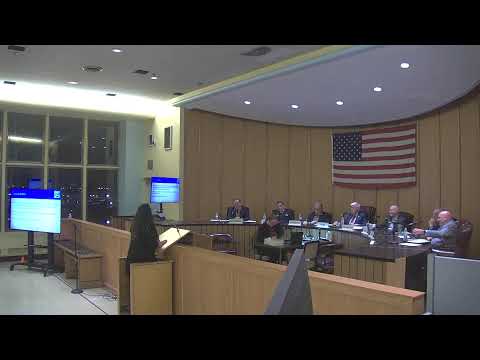
Long Beach residents used the Nov. 18 public-comment period to press the City Council for clearer, more enforceable noise rules after repeated summer complaints. Resident Judy Moran urged the council to revisit the noise ordinance and proposed limits on tented and outdoor music events, including limiting tented music to a small number of events and considering sound barriers to reduce spillover into neighborhoods.
A council member said they had asked staff to prepare a resolution that would require bars and strip businesses to move outdoor music indoors earlier in the evening (discussion at the hearing referenced moving music indoors around 6–7 p.m. in some formulations). The sponsoring council member said he had discussed parameters with staff and corporation counsel; staff and counsel disputed that the council had delivered the precise drafting parameters needed to prepare ordinance language.
The exchange turned into a procedural dispute over how a council member requests an ordinance or resolution from corporation counsel, with the council member insisting he followed code procedures and staff and counsel saying they need clear parameters to draft text. Residents and at least one council member argued enforcement—not just rewriting—was part of the problem, with staff describing how ambient-noise deductions and measurement details can affect enforcement outcomes.
No vote to change the noise ordinance was taken. Council members and staff frequently noted that parts of the code had been upheld in higher courts but that residents remain dissatisfied. Several residents proposed specific measures such as stricter weeknight limits, acoustic-only music on weeknights, reduced frequency of tented music events, and physical sound barriers for outdoor venues.
Next steps: The discussion concluded without council action; residents requested further outreach, and council members indicated they would continue conversations outside the session about potential ordinance language or enforcement changes.