Get Full Government Meeting Transcripts, Videos, & Alerts Forever!
Get email alerts on the Zoning Permitted Use Review topic
No spam. Unsubscribe anytime.
Leon Valley planning commission to review permitted-use table; sets Nov. 19 and Dec. 9 meeting dates
Summary
Commissioners will independently review an 18-page permitted-use table and consider dividing the workload or appointing a small subcommittee; staff will email the packet and compile recommended changes for city council review. The commission approved Nov. 19 and Dec. 9 as alternate meeting dates by voice votes.
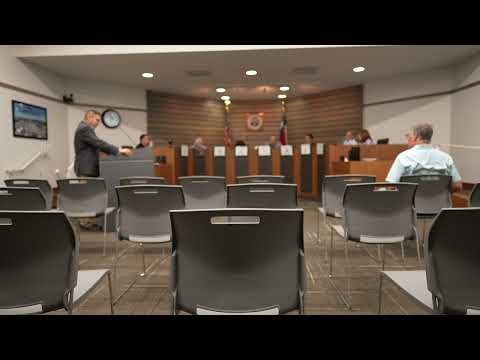
At a Leon Valley Planning and Zoning Commission meeting, members agreed to independently review the city’s permitted-use table and set alternate meeting dates for November and December. Staff said it will email a roughly 18-page permitted-use table and the definitions packet for commissioners to review before the November meeting.
Staff member (Speaker 3) told commissioners, “If you look at your packet... I provided you with regulations for each zone, and I provided you with the permitted use table,” and said staff would consolidate suggested edits into a spreadsheet to send to city council and counsel for legal review. The commission’s task is to recommend whether particular uses—such as the bail-bond example raised by Speaker 1—belong in specified zoning categories (B1, B2, office, etc.).
Commissioners discussed two review methods: divide-and-conquer (each member takes a portion of the table to review) or appointing a 2–3 person subcommittee to prepare a consolidated set of recommendations. Speaker 3 clarified the immediate focus is the permitted-use table’s line items—whether a use belongs in a given zone—rather than wholesale rewriting of district definitions, though minor definition edits can be suggested.
On timing, staff and commissioners said they are aiming to have recommendations compiled for council consideration early next year, with January as the target but February possible if more time is needed. Speaker 3 described the workflow: staff will collect and track edits, attorneys will review changes, and council will make the final decision.
The commission took two voice votes on meeting logistics. After discussion about Thanksgiving-week conflicts, Speaker 2 recommended meeting on Nov. 19; Speaker 4 seconded, and the commission approved the Nov. 19 meeting by voice vote. For December the commission agreed to a backup date of Dec. 9 (motion by Speaker 4, second by Speaker 2), with the caveat that December meetings will be called only if a case or pressing city business requires it.
Next steps: staff will email the permitted-use table and related pages in a searchable format; commissioners will review the materials and return to the November meeting prepared to decide whether to break the work into sections or convene a subcommittee. Staff emphasized that any recommended changes will go to city council and to the city attorney for final review before ordinance changes are enacted.