Get Full Government Meeting Transcripts, Videos, & Alerts Forever!
Get email alerts on the Land Use Development topic
No spam. Unsubscribe anytime.
Leawood council unanimously approves Holbrook North rezoning, sets up TIF and incentives for VanTrust/Lockton project
Summary
After hours of presentations and public comment focused on stormwater and traffic, the Leawood City Council unanimously approved height deviations and rezoning for the Holbrook North mixed‑use development and established a tax‑increment financing district; the council also approved the form of a nonbinding MOU describing a package of pay‑as‑you‑go incentives.
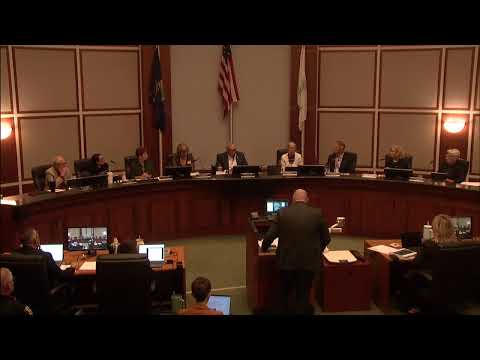
Leawood Mayor Mark Elkins and an eight‑member council gave unanimous approval Wednesday night to a rezoning and preliminary development plan for Holbrook North, a proposed 34‑acre mixed‑use project by VanTrust that includes a possible Lockton headquarters, multifamily housing, a hotel, retail and structured parking.
The council approved height deviations for four buildings and then adopted an ordinance rezoning the site from a planned office district to an MXD (mixed‑use development) district. The votes were followed by an ordinance establishing a redevelopment (TIF) district and a separate council action approving the form of a nonbinding memorandum of understanding that lays out the proposed incentive package, which staff described as a pay‑as‑you‑go mix of tax‑increment financing (TIF), a community improvement district (CID) sales tax, transient guest tax redirection for the hotel and industrial revenue bonds for construction‑material sales tax exemptions.
Why it matters: The developer says Holbrook North will bring roughly 1.48 million square feet of space — including office, residential, hotel and retail — to the northwest corner of College Boulevard and State Line Road and is projected to be a multiyear, multi‑phase investment expected to catalyze expansion in the corridor. The city framed the incentive package as structured and performance‑based: the developer must build and generate the incremental revenues before incentives flow, and staff emphasized the ‘no city bond risk’ nature of the pay‑as‑you‑go financing.
Project and approvals: City planner Julie Hurley told the council the preliminary plan anticipates 11 buildings totaling about 1,482,000 square feet, roughly 400 residential units, a 65,000‑square‑foot hotel with about 145 rooms and approximately 3,673 parking spaces (surface and structured). The applicant requested several deviations from the Land Development Ordinance (LDO), including setbacks, floor‑area‑ratio credits and height increases; the council approved the height deviations and then passed the rezoning and preliminary plan on an 8–0 roll call.
Developer presentation and anchor tenant: Justin Duff, vice president of development at VanTrust, said the company plans a phased build‑out, beginning with an office headquarters that could break ground in 2026; he introduced representatives including the project’s traffic and engineering consultants. Julie Gibson, chief marketing officer at Lockton, told the council Lockton is actively considering the site for a future headquarters and described Lockton as a major regional employer. "This is a special site," Gibson said, and Lockton representatives said they expect to make long‑term location decisions in the coming years.
Traffic and stormwater concerns: Traffic and stormwater were the meeting’s most sustained areas of questioning. Traffic engineers from Phelps and Merge Midwest described intersection improvements (new signals at the 108th/State Line entrance, additional turn lanes and modified site access drives) and said some improvements would be phased with project construction. Councilmembers and residents asked whether U‑turns, peak hour congestion and existing crash patterns at I‑435 and State Line Road are adequately mitigated; the engineers said they modeled corridor growth, coordinated with KDOT/MoDOT/KCMO and proposed signal timing and lane‑lengthening to address issues.
Residents pressed hard on flood risks north of I‑435. Nicholas Dixon and several neighbors said they have recurring backyard flooding and pointed to portions of consultant reports they said show increased downstream flows. “Development without detention increases peak discharge to Indian Creek,” Dixon said, quoting a developer‑commissioned memo.
City and developer experts responded that three independent engineers — including Dr. McEnroe, Water Resource Solutions and Olson Associates — modeled the watershed and concluded that on this site the local runoff peak occurs very early (about 15 minutes after local runoff) while the watershed peak occurs roughly 5–6 hours after a storm; holding water on site (long detention) risks aligning the site peak with the watershed peak and could raise downstream water levels, the consultants said. City public works director David Lay told the council staff and outside reviewers concluded that an extended dry detention basin combined with other BMPs and outlet design best addressed water quality and avoided increasing mapped floodplain elevations. The city committed to continue coordination and further targeted modeling with Olson Associates and others.
Incentives and fiscal picture: City Administrator Diane Stoddard and bond counsel Kevin Wimpey briefed the council on the proposed MOU and the incentive tools. Staff described a proposed 20‑year TIF clock for project area 1, a CID sales tax (city policy generally caps CIDs at 1% but the MOU contemplates a larger package tied to this project), transient guest tax redirection for the hotel and IRBs for sales tax exemption on eligible construction purchases. Financial analysis presented by the city’s consultant estimated the developer‑provided projections would produce substantial incremental revenues at full build‑out and characterized the city’s net incentive exposure as a single‑digit percentage of total project cost over the life of the plan; staff emphasized incentives are performance‑based and largely ‘pay as you go.’
Council action and next steps: After discussion, Councilmember Villa moved to approve the height deviations; the motion passed unanimously. The council then approved the rezoning/preliminary plan (roll call 8–0), voted to approve the form of the memorandum of understanding (voice vote) and adopted an ordinance establishing the redevelopment (TIF) district (roll call 8–0). City staff outlined a schedule that includes a Planning Commission consistency finding (October 28) and a set of public hearings and adoption votes scheduled for December (including the TIF project plan and CID ordinance) if the council elects to proceed.
What remains: Residents pressed staff to keep engaging on stormwater details and to present the additional modeling publicly; the council agreed to continued outreach and follow‑up with the Stormwater Management Committee and consultants. The MOU approved Wednesday is nonbinding and a development agreement with firm performance milestones, timelines and contract language will return to the council for final consideration.
Votes at a glance: Height deviations — approved (unanimous voice vote). Rezoning and preliminary development plan — adopted (roll call vote 8–0). Form of MOU — approved (voice vote). Ordinance establishing redevelopment/TIF district — adopted (roll call vote 8–0).
Council adjourned after the votes and set the next steps for planning and public hearings; staff will return with detailed project plans, final incentive agreements and additional modeling as the review proceeds.
Sources: City staff presentations, council Q&A, testimony from VanTrust representatives and Lockton, and resident public comments recorded in the council transcript.