Get Full Government Meeting Transcripts, Videos, & Alerts Forever!
Get email alerts on the Sewer Remediation topic
No spam. Unsubscribe anytime.
Maumee council approves six‑month extension for in‑home sewer repairs, creates appeals board
Summary
Council approved a six‑month blanket extension from the consent‑decree date for homeowners with prior inspections and established a three‑member Sewer Remediation Appeals Board, while referring financial‑pathway questions to the finance committee amid concerns about contractor capacity and program costs.
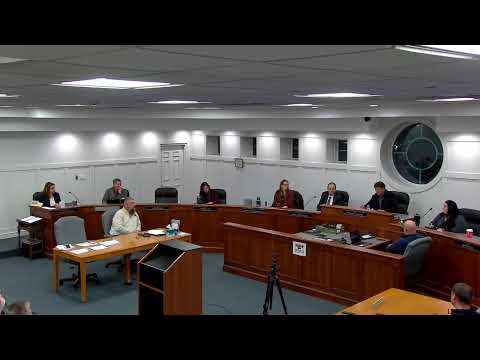
Maumee city officials on Nov. 12 voted to give homeowners who had completed sewer lateral inspections before the city’s consent decree an additional six months to complete required in‑home repairs and to form a three‑member Sewer Remediation Appeals Board to resolve disputes over eligibility and special circumstances.
The measures, moved and seconded at the meeting, apply to households with inspections recorded up to the date of the consent decree and were intended to provide short‑term relief while the city moves ahead with a broad lateral‑lining program. Council also referred the reimbursement‑vs‑direct‑pay financing pathway to the finance committee for further review and asked the law director to draft language addressing real‑estate transfers that involve signed commitment forms.
City staff described how the program will be administered: inspection scheduling and progress will be coordinated through the city’s GIS system, inspection reports are typically returned to residents within about a week, and the city has roughly 75 registered contractors who can perform the work. Staff said lining work paid by the city will focus on external laterals and that certain internal plumbing issues — for example, significant bellies or structural failures that prevent lining — generally remain the homeowner’s responsibility unless they meet a defined exception.
Officials described two financial streams for covering interior remediation. Under the reimbursement pathway, residents pay a contractor and then submit invoices and proof of payment for city review before being reimbursed. Under a direct‑pay pathway, households that meet a debt‑to‑income threshold (staff cited a 43% DTI cutoff for direct payment eligibility) would qualify for the city to contract directly and pay the contractor; staff said income verification would be required for direct pay cases.
Multiple residents at the meeting expressed concern about up‑front costs and whether they must take short‑term loans before reimbursement. City staff replied that reimbursements are processed promptly after review — typically within about a week — and urged residents to sign up for inspections so eligibility and timelines can be established.
The council also discussed technical limits of lining technology: liners can typically accommodate minor bellies and root intrusions, and tree‑root issues are covered, but major offsets or breaks that make lining impossible require point repairs and may fall to homeowners. Staff said cesspools identified in the program will be removed as part of the work.
On funding, city staff cited an engineering estimate from Stantec of about $20 million for internal repairs across the program and noted that, at present, there is no dedicated external funding source for that internal work; those costs are being met through user fees. Staff and councilmembers said some grant funds are available for laterals but not for all in‑home repairs, and they emphasized uncertainty about the ultimate program cost until more inspections and project work proceed.
In addition to the extension and the appeals board, council members urged stepped‑up outreach to get homeowners scheduled for inspections and commitment forms signed before year‑end windows that affect grant eligibility, suggesting door‑knocking, email, CodeRed notices, realtor and title‑company coordination, and community events.
The motion passed on a roll call vote. Council instructed its law director to draft transfer‑of‑title language for closing‑table negotiations and referred financial‑pathway questions and the reimbursement details to the finance committee for further study. The appeals‑board structure, powers and appointment process will be fleshed out by counsel and returned to council for formal ordinance language.
Next steps: the finance committee will review the direct‑pay/reimbursement framework and report back; the law director will prepare draft transfer language and the council will receive a proposed ordinance creating the appeals board.