Get Full Government Meeting Transcripts, Videos, & Alerts Forever!
Get email alerts on the Land Use Solar Project topic
No spam. Unsubscribe anytime.
Oroville planning panel certifies mitigated negative declaration, approves three-site solar project amid Superfund concerns
Summary
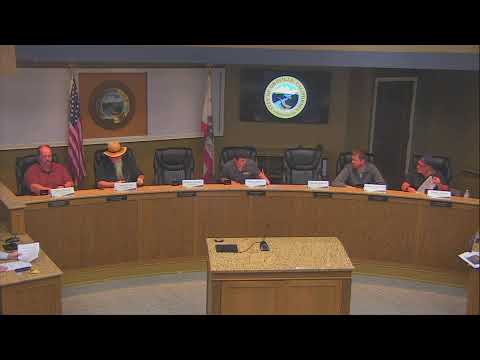
The Oroville Planning Commission voted 5–0 (two absent) on Nov. 10 to certify a mitigated negative declaration and approve a use permit covering three solar sites — including a parcel within the Copper Superfund boundary — after public commenters raised dioxin and environmental‑justice concerns. The commission imposed mitigation, monitoring and coordination with state agencies.
The Oroville Planning Commission on Nov. 10 certified a mitigated negative declaration and approved a use permit, variance and fence findings for a three‑site solar project, including a parcel within the Copper Superfund boundary. The commission voted to accept staff’s recommended Option 1 by a 5–0 vote with two members absent.
The project as presented covers three locations: the former copper site, a 50‑acre parcel on South 7th Avenue (the Sillars site), and the Reynoso parcel. Staff told the commission the CEQA evaluation had been completed and made the mitigated negative declaration available for public review; four written comments were received from site managers, the Department of Toxic Substances Control, a law firm and the California Department of Fish and Wildlife.
The staff recommendation included mitigation and a mitigation monitoring and reporting program. Staff said one consultant recommended pre‑construction surveys for bird species, including a conservative recommendation to survey a 500‑yard radius for the tricolored blackbird before construction. The final site plan for the solar panels will be reviewed by the Department of Toxic Substances Control and the U.S. Environmental Protection Agency; staff noted the site operator (identified in the record as Beazer) and state agencies will approve where panels and equipment may be placed.
Several residents urged caution. Community member Linda Draper, speaking for a local "dioxin education committee," told the commission the area remains contaminated and warned of health risks, saying the material "is horribly carcinogenic, gets into the soil, the air, and the water." Draper asked the commission to pause the project so residents would not be exposed.
A second theme in public comment was concern about related or future industrial uses. Skipper Clark and Brian Wong asked whether large power users or future projects (such as data centers) would consume the electricity produced and how the project would serve local customers; Wong said the work could support a municipal utility district to lower local rates.
Kathy, a community member, raised environmental‑justice and transparency concerns, noting the project area "lies within the Copper Superfund site," questioning whether the district attorney, Butte County Public Health and Butte County Environmental Health had been engaged, and pointing to the record’s 25‑foot buffer from contaminated areas.
Applicant representatives addressed those concerns during the hearing. Michael Spencer, speaking for the applicant team, said, "this solar plant is not part of the biomass plant," and described the solar project as a standalone, zero‑emission supply intended to provide cost‑effective power to Oroville’s public utility and industrial customers. Pat (an on‑record representative) said agencies including DTSC, the Air Quality Management District and state public‑health entities had been consulted and that the biomass project remains separate; Pat said the biomass project would not be built before 2029 and that no permits for it have been submitted.
Commission discussion focused on whether placing panels on top of the Superfund parcel — with slab or ballast foundations rather than excavations — would be an acceptable reuse while active groundwater cleanup and monitoring continue. One commissioner said turning a contaminated parcel into a solar site "turns something that’s negative into something that’s going to help the city," and staff confirmed long‑term monitoring for groundwater cleanup will continue.
The commission first voted to certify the mitigated negative declaration and then to accept staff’s Option 1 to approve all three sites with conditions and delegated follow‑up to staff. The record shows both motions passed by a 5–0 margin with two members absent. The commission closed the special meeting and set its next regular meeting for Nov. 20, 2025, at 6 p.m.
What’s next: the approved mitigated negative declaration and conditions require the applicant to complete mitigation measures and enter into a mitigation monitoring and reporting program; final panel layouts and any site work must be coordinated with DTSC, U.S. EPA and the site operator. Further town halls and public outreach on the separate biomass proposal were announced in the record.