Get Full Government Meeting Transcripts, Videos, & Alerts Forever!
Get email alerts on the Transportation Planning topic
No spam. Unsubscribe anytime.
Norwalk staff outlines near‑term corridor projects as growth increases traffic
Summary
City staff presented a 5‑year list of corridor projects — North Avenue, Beardsley, Orchard Hills Drive and Cherry Parkway — saying capacity issues driven by development and school traffic will require corridor reconstructions, roundabouts or 3‑lane sections and multi‑year design and utility work.
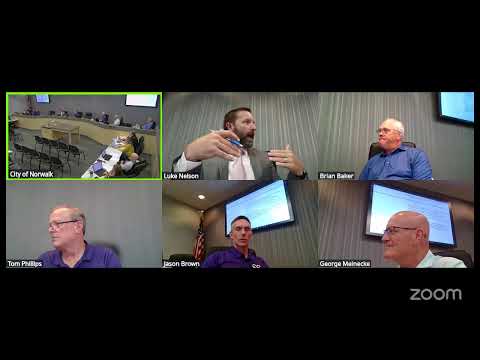
At the Oct. 2 Norwalk City Council meeting, Wayne (city staff) presented a briefing on near‑term corridor projects the city expects to need over the next five years because of growth and rising traffic volumes.
Wayne identified four priority corridors: North Avenue (east and west of Highway 28), Beardsley Street West and Orchard Hills Drive (which will eventually connect to High Road). He said the corridors are experiencing turning‑movement congestion near schools and new housing developments and that certain intersections are already at or approaching failing levels of service. The 2023 study of North Avenue East showed the westbound leg of a key intersection at level of service D; study recommendations included converting segments to three lanes with a two‑way left‑turn center lane and, in some locations, considering roundabouts or traffic signals depending on volumes and right‑of‑way constraints.
Wayne emphasized these are corridor improvements tied to expansion and capacity — not routine maintenance — and described the timeline and constraints: design, survey, utility relocations and possible property acquisition mean that even if council approves a project today, construction could be one to three years away. He also warned against starting multiple major corridors at once because if one corridor is under construction, traffic will shift to others.
On specific design choices Wayne said roundabouts can provide high levels of service but require more space and sometimes property acquisition; traffic signals may be more feasible where space is constrained. He suggested moving forward with design work now so the city can be ready to apply for safety or capacity grants; grant award schedules may be several years out, so having designs ready will make the city more competitive.
Council members asked practical questions about pedestrian and bus turning movements; Wayne said turning‑movement analyses include delivery vehicles, buses and school traffic and that roundabout curbs can be mountable to accommodate long vehicles when needed.
Wayne concluded that North Avenue East near the high school is a near‑term design candidate and recommended the council consider corridor improvements in the CIP process to position the city for grant funding and manage construction sequencing.
“Roundabouts are good if they're appropriate,” Wayne said, noting tradeoffs between footprint and traffic performance.
Next steps: staff will bring corridor items forward in the capital improvement plan, begin design for the highest‑priority segments, and pursue grant opportunities where appropriate.