Get Full Government Meeting Transcripts, Videos, & Alerts Forever!
Get email alerts on the State And Federal Funding topic
No spam. Unsubscribe anytime.
Oroville hears state $18 billion shortfall, Prop 4 bond allocations and Army Corps levy needs
Summary
State legislative analysts forecast an $18 billion budget gap, lobbyists flagged Proposition 4 bond funds and federal opportunities for Oroville, and an Army Corps of Engineers levee survey identified roughly $3–5 million in work — items staff said they will pursue through grants and earmark efforts.
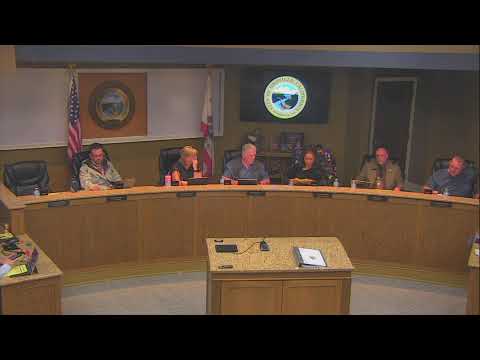
City consultants and lobbyists briefed the Oroville City Council on state and federal funding opportunities and constraints, encouraging early engagement in the next legislative session.
Dylan, representing the city’s state lobbying team, told the council the Legislative Analyst’s Office projects about an $18 billion state deficit next year and said the most immediately available local funding pathway may be programs tied to Proposition 4, a voter‑approved $10 billion climate bond. He itemized allocations the legislature authorized to the market: $1.2 billion for safe drinking water, $400 million for wildfire and forest mitigation, and $100 million for extreme heat programs, and said some funding streams must be targeted to disadvantaged communities.
Federal representatives urged the council to continue pursuing earmarks and other competitive grants. Chris Griffin and his team said the city’s prior earmark request for Southside Oroville infrastructure did not advance but that building relationships with delegations remains essential. Grants staff reported more than 50 grant notices had been circulated and that staff are assisting departments to make applications competitive.
A practical funding lead came from a recent Army Corps of Engineers survey: the city said the Corps will present a draft report identifying levee work estimated at roughly $3 million to $5 million. Councilmembers asked grants staff to add that work to the funding matrix and pursue applicable federal programs, including the Water Resources Development Act process.
The council also heard that Oroville’s population temporarily exceeded USDA rural‑development program eligibility by roughly 42 people — a change attributed in part to post‑Camp Fire relocations — and staff said they are exploring options such as excluding certain populations to meet thresholds when feasible.
What happens next: staff and lobbyists recommended a spring visit to Washington, D.C., to press for earmarks and WRDA priorities, and grants staff will track Prop 4 implementation and the Army Corps report for funding applications.