Get Full Government Meeting Transcripts, Videos, & Alerts Forever!
Get email alerts on the Municipal Governance topic
No spam. Unsubscribe anytime.
Norwalk council approves water‑loan, multiple rezoning actions and two ordinances
Summary
At its Oct. 2 meeting, the Norwalk City Council approved a resolution to proceed with a water‑revenue loan for a new water tower, initiated several rezoning studies and adopted final ordinances on accessory dwelling units and open burning; council also approved a fieldhouse courtyard design and other routine items.
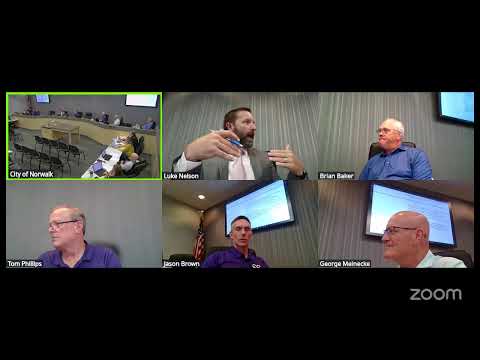
Norwalk City Council on Oct. 2 voted on a package of measures that included financing steps for a new water tower, several zoning actions and two city code amendments.
After a public hearing on financing for the planned water tower, council approved a resolution authorizing additional action to enter a water revenue loan and disbursement agreement. The motion (moved by Council member Cool, seconded by Council member Meineke) carried on roll call. During the public hearing staff outlined grant and State Revolving Fund (SRF) options in the agenda packet; a member of the public asked about the construction timeline and staff said construction is expected to begin in spring with hoped completion by the following fall (the transcript contained unclear year phrasing for the target dates).
Council also moved forward on multiple zoning items. The council approved the first reading of an ordinance to rezone a 1.6‑acre portion of 8481 and 8485 45th Lane from AR (Agricultural Reserve) to RE‑1 (single‑family rural estate) after planning staff said the property owner plans to split the back piece to allow a house to be built. Council later approved resolutions initiating review of several areas for potential rezoning to the Founders District (to address garage/setback configurations) and referred a proposal to allow detached garages to exceed the square footage of the house to the planning and zoning commission for study and a public hearing.
On parks and public realm improvements, council approved a resolution for the City State Bank Fieldhouse courtyard concept, which included a 25‑foot U.S. flagpole flanked by state and city flags and design changes to add shade and raised planting beds.
Council adopted two final ordinances: an amendment related to accessory dwelling units (to conform the zoning code with recent state legislation) and amendments to Chapter 53 governing recreational fires within the city (requiring recreational fires to be at least 10 feet from structures and restricting certain building materials). The accessory dwelling units ordinance passed with one recorded 'No' vote from Council member Baker; the open burning ordinance passed on roll call with affirmative votes recorded.
Other routine business — approval of the agenda, consent agenda items and multiple resolutions to send rezoning initiatives to the planning commission — also carried. Council closed the meeting by voting to enter closed session to discuss the purchase or sale of particular real estate under the cited state statute.
“These are projects that I see on the five‑year radar that are capacity related,” Wayne said during the meeting, framing the city’s broader infrastructure needs. The council did not take a final vote on the street‑capacity presentation itself; that item was presented for input into the capital improvement planning process.
Next steps: staff will pursue design work and grant opportunities where appropriate, and the planning and zoning commission will study the referred rezoning items before returning recommendations to council.