Get Full Government Meeting Transcripts, Videos, & Alerts Forever!
Get email alerts on the Utilities And Budget topic
No spam. Unsubscribe anytime.
Lake Oswego studies modest utility rate increases, long‑range sewer financing and options to shore up street paving
Summary
Council reviewed staff’s 2026 master fees and charges study session: staff proposed a 2% water rate increase, a ~3% indexing approach for many fees, described a potential $50–60 million sewer financing spike in future years, and discussed street‑sweeping service levels and pavement funding options including franchise revenue.
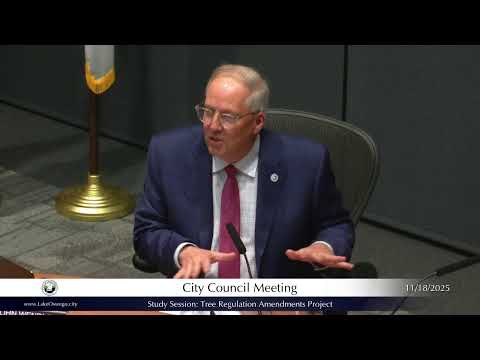
Lake Oswego staff presented a study session on Nov. 18 reviewing indices and models that will inform the city’s 2026 master fees and charges. Staff recommended modest adjustments aimed at keeping fees aligned with inflation and long‑term capital needs while avoiding large, single‑year spikes for ratepayers.
Staff opened with an index review and noted recent CPI and construction‑cost trends used for fee setting. "This year is probably one of the least exciting years because… they're pretty much around 3%," the presenter said when explaining the basis for the recommended indexing approach.
Key proposals and findings included:
• Water: staff proposed a 2% increase for the water utility primarily to cover operations and inflationary pressures on non‑debt expenses; the water fund balance is near $14 million in staff projections.
• Stormwater and other general fees: staff used a construction cost index and recommended approximately 3% indexing for stormwater and many engineering fees to support capital projects such as catch basins and storm drains.
• Sewer/wastewater plant financing: staff reiterated that a major wastewater plant project remains contingent on intergovernmental agreements and other unknowns; modeling shows a multi‑year financing spike when full faith and credit bonds are issued for portions of the project not covered by loans or partner funding. Staff discussed model scenarios that showed $50–60 million in potential bond issuance in a future biennium and fund balances that would dip and recover around those events.
• Streets and pavement: the street fund model shows a multi‑year fund balance that can be used for planning, but councilors expressed concern that paving costs have risen faster than CPI and that current spending may not maintain pavement condition indices. Councilors and staff discussed revenue options — including franchise revenue — that could be evaluated for pavement preservation and prioritized for future workplan consideration.
• Operations and service concerns: councilors raised multiple constituent complaints about street sweeping and leaf pickup cadence; staff explained fleet limitations (periodic breakdowns of sweepers), seasonal demand surges and that crews sometimes work weekends to catch up. Staff asked councilors and residents to report specific streets needing attention so crews can prioritize.
Staff said it will return Dec. 2 with a resolution reflecting changes the council supports and continue work on street funding options for 2026 and beyond.
Next steps: staff will present a draft resolution on Dec. 2 and bring revenue‑option analyses and pavement‑preservation scenarios to future budget discussions.