Get Full Government Meeting Transcripts, Videos, & Alerts Forever!
Get email alerts on the Subdivision Regulations topic
No spam. Unsubscribe anytime.
Norwalk Council pauses street‑construction and bonding changes after developer pushback
Summary
Council tabled a first reading of subdivision ordinance amendments that would require subdrains and stricter bonding, directing staff to work with developers after concerns that bonding language and costs (estimated $4,000–$5,000 per lot by developers) could hurt affordability and be impractical.
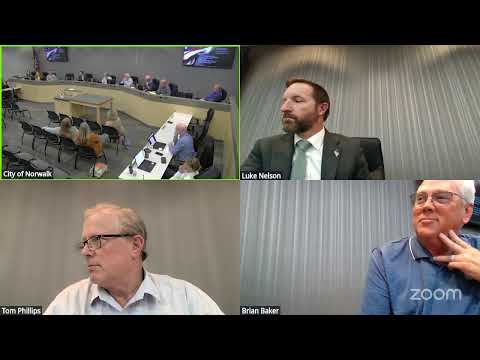
Norwalk City Council on Nov. 6 tabled the first reading of proposed changes to Chapter 176 of the city code that would require subdrains and a granular subsurface on new streets and tighten developer bonding and warranty language, directing staff to work with developers on clearer bonding language and a phased approach.
The ordinance changes grew out of repeated premature failures of relatively new streets. City staff explained the proposal would add subsurface drainage and a granular subbase to most new streets to extend pavement life and reduce future reconstruction costs. Staff said a retrofit subdrain project ran about $15,000 per lot and estimated the incremental frontage cost of the new standard in recent staff analyses at roughly $2,000 per lot in some configurations.
Developers and the Home Builders Association urged caution. Dan Knopp of the Home Builders Association thanked the city for hosting next year’s home show and said the association wants to help find a middle ground, while Dave Harmier of Vista Real Estate and Caleb Smith of Hubbell Realty said brief review time left them concerned the bonding language was impractical. Smith said his firm’s analysis shows construction costs of roughly $4,000–$5,000 per lot for the measures in the draft, and argued that forcing the extra cost across every lot risks making Norwalk lots noncompetitive with nearby markets.
Legal counsel for developers and other attendees faulted the bond language as originally drafted for appearing to require developer‑level warranty bonds that many firms cannot obtain; staff said the intention is consistent with many peer cities and that subcontractor bonds remain an option. Council and staff discussed alternatives including continued reliance on geotechnical reports that tailor recommendations to site conditions, phased implementation for plats already in process, and city participation to offset some upfront costs during a transition.
After extended exchange, Councilmember Meineke moved to table the ordinance and direct staff to refine the bonding provisions and return with a proposed phased implementation and clearer draft. The motion carried on roll call. Council also asked staff to consider holding new preliminary plat approvals until the issue is clarified, to avoid creating additional projects subject to a substantially different standard.
The discussion brought more than a dozen public commenters and multiple developer representatives to the podium and highlighted a tension many cities face: raising long‑term pavement standards to protect taxpayers while keeping lot prices affordable in a competitive regional market. The item will return after additional stakeholder meetings and revised language from staff.