Get Full Government Meeting Transcripts, Videos, & Alerts Forever!
Get email alerts on the Wastewater Rates topic
No spam. Unsubscribe anytime.
Regional wastewater authority outlines cost‑allocation changes and rerating study that could lower some charges for Manassas Park
Summary
Upper Occoquan Service Authority (UOSA) presented a jurisdictional cost allocation study and a rerating analysis that would separate septic hauler charges, establish a capacity‑loaning mechanism, smooth reserve maintenance charges, and deliver latent nutrient‑removal capacity through $50–$60 million of targeted projects rather than a full $200 million expansion.
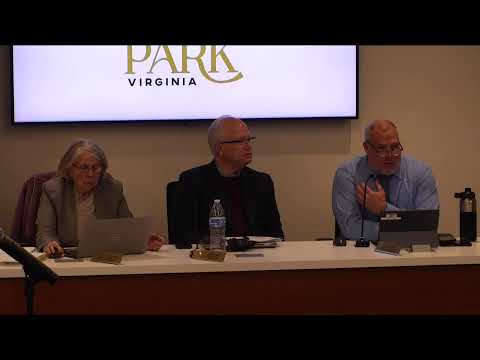
Brian Steglitz, executive director of the Upper Occoquan Service Authority (UOSA), told the Manassas Park City Council on Dec. 2 that UOSA had completed a jurisdictional cost allocation study and a rerating analysis intended to make charges more equitable across the authority’s customers.
Steglitz said UOSA operates a roughly 54 million‑gallon‑per‑day plant, serves about 500,000 residents across multiple jurisdictions and maintains a 10‑year capital plan of about $625 million. He said the cost‑allocation work recommends three near‑term changes: billing septic hauler receipts on a cost‑of‑service basis, adopting a capacity‑loaning mechanism so jurisdictions that exceed their nutrient allocations compensate those with spare capacity, and leveling reserve maintenance charges across the year rather than charging jurisdictions after costs are incurred.
On the rerating study, Steglitz said UOSA stress‑tested plant systems and found latent nutrient‑removal capacity that can be recovered by a set of smaller capital projects rather than building a large new expansion. "Instead of doing sort of this mass addition, we can do several smaller projects to uncover latent capacity that currently exists," he said, and estimated the portfolio of projects at roughly $50–$60 million. By contrast, staff said adding about 6 million gallons per day in the traditional expansion model was estimated near $200 million.
Council members asked how the rerating and subsequent capital projects would affect local rates. Steglitz said day‑to‑day operation and maintenance costs are flow‑based and charge customers by metered usage, while capital costs are distributed based on proportional ownership of the plant; rerating would reallocate nutrient‑removal capacity among jurisdictions and any capital investments for rerating would be shared proportionally. He offered to return with a more detailed capital plan for council review.