Get Full Government Meeting Transcripts, Videos, & Alerts Forever!
Get email alerts on the School Safety topic
No spam. Unsubscribe anytime.
Chicago board hears urgent pleas for protections as federal enforcement activity rises
Summary
Board members, students and parents pressed Chicago Public Schools for immediate safety measures after a surge in federal enforcement activity, asking for more signage, safe passage funding and options for virtual learning. CPS leaders said the district lacks legal authority to call districtwide remote learning and is coordinating a command center response.
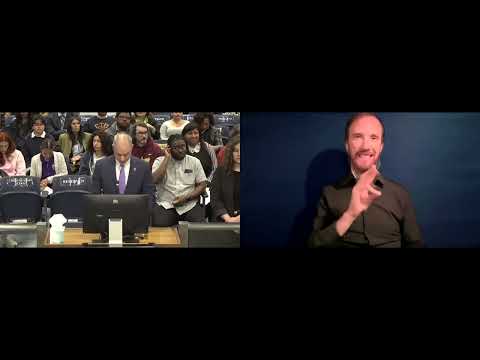
At its Oct. 23 meeting, the Chicago Board of Education heard urgent testimony from members, students and parents about a sharp rise in federal enforcement activity in neighborhoods near schools and its impact on student attendance and family safety.
Board member Maria Lozano told colleagues: "It is an emergency, period," describing community reports of detentions near school routes and parents who are too frightened to send children to class. Multiple board members and union representatives urged the district to expand immediate supports — from safe-passage staffing to mental-health resources.
Interim Superintendent Macklin King outlined the district's response: a student safety command center to streamline communications, twice-daily triage calls, mental-health resources and coordination with city public-safety leaders and labor partners. "CPS will remain vigilant during this time and will continue doing everything possible to support our staff, families, and students," King said.
Board members also pressed for practical steps: signage and gate protocols, real-time communications with board members, and expansion of safe-passage programs. Charles Mayfield, the district's chief operating officer, said CPS has "ordered over 500 signs" for priority schools and that gates should be closed after hours when appropriate.
Several board members and union leaders asked whether the district could shift to remote learning for affected students. King and other district officials repeatedly cautioned that CPS cannot unilaterally mandate districtwide remote instruction: as King put it, "Chicago Public Schools does not have the authority to call remote learning. That is the governor's authority." The district said it is preparing contingency remote-learning plans to deploy if an emergency authorization is issued.
Union leaders and parent advocates urged the board to use incoming city resources described in meeting remarks as a record TIF surplus to bolster safe passage, social-emotional supports and virtual options, and to press state leaders for broader policy changes. The board asked senior staff to provide follow-up materials on signage installations, gate policies, the command center's operations, and potential avenues for expanding safe-passage staffing.
The board's discussion closed with a pledge from CPS leadership to share protocols and to continue daily coordination with community partners and labor unions. The next procedural step is for staff to return to board members with detailed reports and implementation timelines.