Get Full Government Meeting Transcripts, Videos, & Alerts Forever!
Get email alerts on the Monitoring Network topic
No spam. Unsubscribe anytime.
Wyandotte Creek GSA approves initial monitoring network for interconnected surface waters and groundwater-dependent ecosystems
Summary
The Wyandotte Creek GSA board approved a preliminary monitoring network that adds three existing wells to five wells already in the groundwater sustainability plan, and accepted an approach and timeline to set preliminary sustainable management criteria ahead of a 2027 plan amendment.
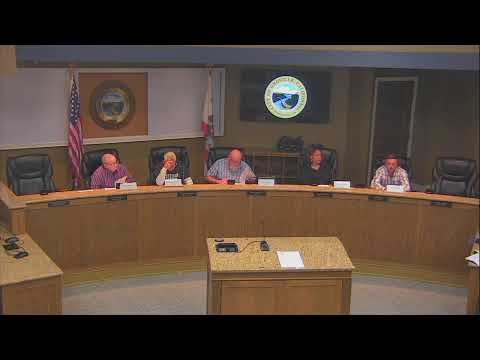
The Wyandotte Creek Groundwater Sustainability Agency board on Oct. 23 approved a preliminary monitoring network and an approach to develop sustainable management criteria for interconnected surface waters and groundwater-dependent ecosystems.
Becky Fairbanks, Sigma Grant project manager, introduced the topic and reminded the board that the agency is responding to corrective actions from the California Department of Water Resources (DWR). "We're gonna give you a little background... you're gonna hear what DWR is recommending corrective actions for us," she said, adding that the board would not be asked to adopt final criteria at the meeting.
Consultants described using the existing Butte Basin groundwater model to identify stream reaches that appear to gain or lose water and to prioritize monitoring sites where data gaps are largest. The consultants proposed eight monitoring wells as an initial network (five wells referenced in the 2022 Groundwater Sustainability Plan and three additional existing shallow wells with at least five years of data). The consultants stressed model uncertainty and the need to validate model outputs with field data before using them as criteria. "The model is not perfect... so that's gonna be the next step," the consultant said.
Groundwater-dependent ecosystems (GDEs) were mapped using depth-to-groundwater benchmarks (typical conditions, 2015 and 2021) compared with rooting depths for dominant riparian species. Consultant Byron Amerson of Environmental Science Associates recommended targeted vegetation surveys and long-term monitoring in a south–central axis of the basin where vegetation patches appeared most sensitive to water-table declines. "A groundwater dependent ecosystem is an ecological community of species that depend on groundwater emerging from aquifers or on groundwater occurring near the ground surface," Amerson said while explaining methods for identifying sensitive patches.
A board member moved to approve the selected monitoring sites and the proposed approach and timeline; the motion was seconded and approved by voice vote after a public comment that questioned reliance on model results. The board's action establishes a path to submit a periodic evaluation and plan amendment by Jan. 2027 with preliminary sustainable management criteria and to expand data collection (including new grant-funded wells) through 2032.
Staff said new well drilling under the grant will provide additional data to refine criteria and that the initial SMCs set by March will be provisional and re-evaluated as new data arrive. The board scheduled additional outreach and reporting as part of the timeline.
The board did not set final numeric criteria at the meeting; consultants and staff said the next steps are targeted vegetation surveys, monitoring-site establishment, data collection, and a formal plan amendment submission in January 2027.