Get Full Government Meeting Transcripts, Videos, & Alerts Forever!
Get email alerts on the Fees topic
No spam. Unsubscribe anytime.
Windrock Creek GSA votes to pursue regulatory fee and two‑part structure
Summary
The Windrock Creek Groundwater Sustainability Agency voted to pursue a regulatory fee with a two‑part structure: a parcel-based part 1 to cover agency administrative costs and a part 2 charged per cropped acre or managed wetland acre to capture groundwater-use costs. Staff and an ad hoc will refine equity adjustments and final rates.
The Windrock Creek Groundwater Sustainability Agency voted on Nov. 20 to pursue a regulatory fee and a new two‑part fee structure, directing staff to continue refining the details and equity adjustments before setting specific rates.
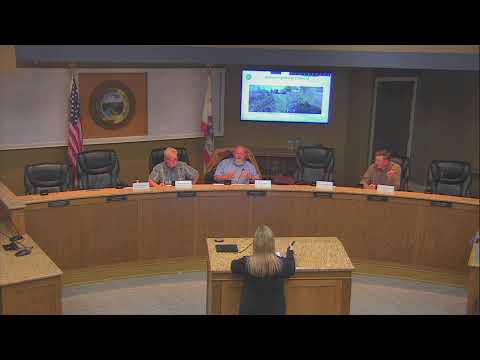
The vote follows a presentation by Catherine Hansford, who said the two parts would serve different purposes: “A parcel fee means that everyone pays the same for a parcel,” she told the board, describing part 1 as covering administrative costs such as insurance, audits, legal fees and personnel. A separate part 2, she said, would be charged per cropped acre or per managed wetland acre to capture costs tied to groundwater use.
Why it matters: under the proposed approach, grazing land would pay only the part 1 parcel fee, while irrigated acreage and managed wetlands would pay the per‑acre part 2 charge. That changes the district’s current approach, which charges many agricultural parcels on total parcel acreage and exempts some nontaxable parcels under existing practice.
Board members raised equity concerns during the discussion. Several directors noted municipal and domestic users make up a small share of groundwater pumping but could bear a relatively large share of part‑1 costs under some allocations. Hansford proposed an adjustment that would reduce part‑2 charges for parcels receiving imported Feather River water, reasoning that imported water contributes to basin recharge and so produces fewer part‑2 costs. She presented an illustrative example in which a groundwater‑only parcel’s annual part‑2 share might be about $3.10 while a parcel using imported surface water would pay about 31¢ in the illustration; Hansford emphasized these figures were illustrative and the board will set final percentages later.
Public comment: Todd Kimelshu, who identified himself as a board member on the Vina GSA, urged the board to adopt the two‑part model used by neighboring districts as “more equitable” for large irrigators.
What the board decided: directors moved and approved a motion to proceed with a regulatory fee and a part‑1/part‑2 fee structure, and directed staff and the ad hoc committee to refine the allocation percentages and equity adjustments before the fees are finalized. Staff indicated the new fee schedule would be developed for possible adoption in time for the fiscal year beginning July 1, 2026.
Next steps: staff will return with a five‑year budget outlook used for fee setting, refined allocation options (including any Feather River adjustments), and specific proposed fee levels; the board signaled additional workshops and ad hoc meetings will be used to settle outstanding equity questions.