
First reading set for rezoning of 495 Duncannon Lane after planning commission recommendation; resident raises traffic, historic-site concerns
Get AI-powered insights, summaries, and transcripts
Subscribe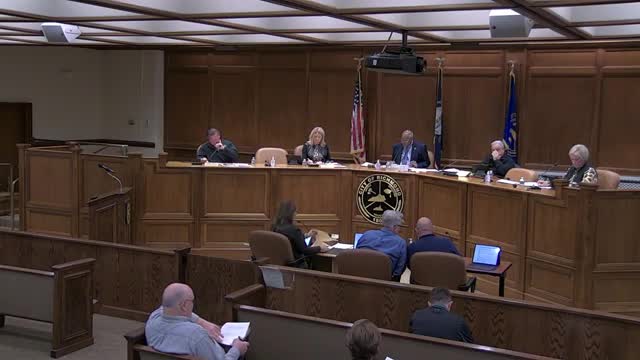
Summary
The Richmond Board of Commissioners held a first reading of Ordinance 25‑17 to rezone 190 acres at 495 Duncannon Lane from agriculture to I‑2 heavy industry; planning officials recommended approval but a resident urged setbacks and protection for Fort Ancient archaeological sites and warned of traffic impacts.
The Richmond Board of Commissioners on first reading considered Ordinance 25‑17, a rezoning request to change about 190 acres at 495 Duncannon Lane from AG (agriculture) to I‑2 (heavy industry). City documents and the planning and zoning commission record show the Richmond Industrial Development Corporation applied for the change and the planning body held a public hearing Nov. 19, 2025 before recommending approval to the commission.
City Manager presentation noted the city secured a $2,000,000 state economic development award under the Product Development Initiative and contributed a local match of $2,744,000, producing a reported total purchase price of $4,744,000 for the site. The manager said the property backs up to an existing Industrial Park and is on a corridor with utilities and a four‑lane road, which he said makes it suitable for industrial development in the city’s comprehensive plan.
Resident Jean Marie Hibbard addressed the board during public comment, stating she lives in a nearby subdivision off Golden Leaf Boulevard and Pavilion Way and raising several concerns. Hibbard warned that a single right‑turn exit from the neighborhood and a nearby J‑turn could create traffic backups if industrial traffic increases or if incidents block the interstate. She asked the commission to consider a second exit for subdivisions and urged “setbacks to preserve the viewshed from Duncannon Lane.”
Hibbard also told commissioners she had been informed of multiple Fort Ancient period archaeological sites on or adjacent to the property, including the Duncannon Mound, and said those sites are eligible for the National Register of Historic Places. The city manager and the industrial development director told the resident they had fenced and planned to protect known sites; Hibbard asked the commission to maintain substantial buffers from adjacent homes and farms and to avoid locating heavy industry immediately next to residences.
The resident also suggested caution about recruiting data centers or other water‑ and power‑intensive uses, saying such facilities could place large demands on electricity and water supplies near neighborhoods. The planning and zoning recommendation, as read into the record, indicated the commission adopted written findings of fact and forwarded the zone change to the board for final consideration.
This was the ordinance’s first reading; the city attorney stated there would be no vote tonight. The board scheduled the item for a future regular meeting where a second reading and a final vote will be required. The record includes the planning commission’s recommendation and the public comment above; commissioners did not take further action at this meeting.