Get Full Government Meeting Transcripts, Videos, & Alerts Forever!
Get email alerts on the Housing topic
No spam. Unsubscribe anytime.
Housing North tells Petoskey council local rental shortfall concentrated under 50% AMI; Zoning Atlas promoted as planning tool
Summary
Housing North presented data showing a Petoskey rental gap and countywide demand concentrated among households below 50% of area median income, described local projects coming online and introduced the Zoning Atlas as a parcel-level tool to speed zoning analysis and site identification.
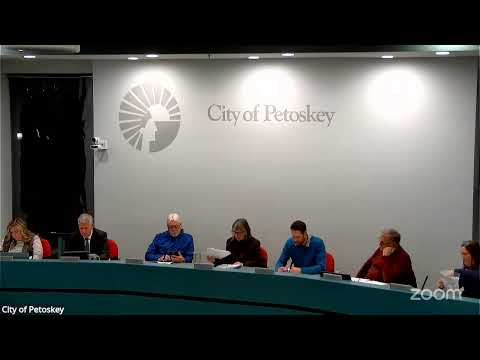
Shelley Sharan, director of community engagement for Housing North, told the Petoskey City Council on Nov. 6 that a 2023 housing needs assessment anticipates local housing deficits through 2027 and that the most acute rental need falls below 50% of area median income (AMI). "It shows that there's a rental gap of 273 units and a for sale housing gap of 340 units," Sharan said, summarizing the city-level findings and flagging even larger countywide figures.
Sharan said the assessment shows the highest rental shortfall is among households earning below 50% AMI (about $41,600 annually) and noted that homeownership demand is strongest in the 81–120% AMI band. She identified workforce and mixed-income projects now in progress in Petoskey — including the Lofts at Lumber Square (about 60 workforce apartments), Victory Square (about 50 apartments) and other developments — and emphasized preservation work supported by CDBG home‑repair funds and a Northern Homes Community Land Trust effort.
The presentation introduced the Zoning Atlas, a GIS-based tool that converts ordinance text into a map so planners, developers and residents can click on parcels to see what is allowed. Sharan said the tool helps communities identify unused legal capacity for housing and “gentle density” options such as duplexes, multiplexes and accessory dwelling units that can diversify housing types without introducing high-rise density.
Councilmembers asked about how the assessment numbers were calculated and how units in progress were categorized. Sharan said the 937 units reported “in progress” include projects at many stages — from concept and land assembly to construction — while building permits (197 since 2023) capture projects that have moved into construction. She said some figures cited during the meeting reflected Emmet County totals rather than city-only counts and offered to provide a breakdown for council staff.
Why it matters: Petoskey is seeing several large rental projects come online, but the Housing North presentation underlined persistent supply shortfalls at lower income levels that typically require stacked subsidies and coordination among public, nonprofit and private partners. The Zoning Atlas could speed local planning decisions by making ordinance constraints visible at the parcel level.
Sharan closed by encouraging Petoskey to participate in the community-planning phase of the Atlas and to use Housing North’s toolkits and convening role to align zoning reform, funding tools (MEDC, MSHDA, HTIF, CDBG), and project partners.
Next steps: Sharan offered to provide the council a detailed alignment of the 865-county rental gap versus city-specific calculations, and Housing North will notify the city when community planning for the Zoning Atlas begins.