Get Full Government Meeting Transcripts, Videos, & Alerts Forever!
Get email alerts on the Downtown Revitalization topic
No spam. Unsubscribe anytime.
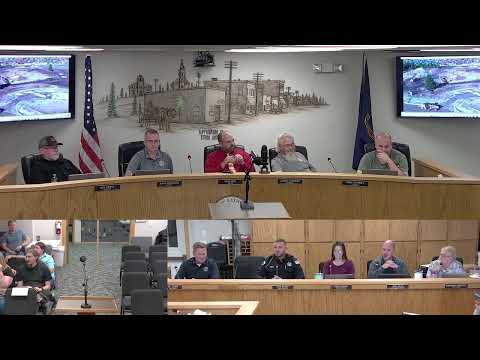
Rathdrum council hears tense debate over downtown revitalization, trees and costs
Summary
Council and staff reviewed the downtown revitalization project, explaining why mature trees were removed, shared engineering estimates for replanting versus planters, and weighed costs, grant restrictions and business impacts. Staff suggested raised planters or smaller trees as lower-cost compromises; council did not take action and asked staff to return with more info.
Rathdrum — A prolonged council discussion on Oct. 14 laid out the engineering, budget and community trade-offs behind the city’s downtown revitalization work and the decision to remove mature trees during demolition.
City Administrator Leon and project engineer Kevin described the project's timeline and the mechanics that led to tree removal. The council learned the project was approved after a public process, committee work and a public hearing; a grant (approximately $350,000) funds infrastructure items such as sidewalks, curbs and irrigation but does not cover many beautification items. Staff said previously installed metal culvert sleeves intended to protect sidewalks did not prevent root growth; roots grew over or around the culverts and ultimately lifted panels, creating trip hazards and requiring frequent grinding over the past decade.
Kevin offered preliminary cost estimates for reintroducing trees: approximately $5,000 per tree if incorporated before concrete work (includes tree cost, cover, digging and engineering) but about $12,000–14,000 per tree to retrofit after work is finished (curb cutting, repouring and matching finishes). Staff cautioned that retrofitting now would require redesign, a contractor change order and additional city budget dollars not covered by the grant. Leon said halting work to redesign would delay contractors’ 30-day phase windows and could increase costs and business disruption.
Councilmembers and members of the public criticized the visual impact of removed trees and asked whether smaller trees, raised-planter boxes or artificial trees could be used as compromise solutions. Staff said above-ground planters are feasible and cheaper but limit tree root systems and canopy size; they said irrigation stubs could be left at light poles to support later plantings if decisions are made quickly. Several councilmembers expressed support for exploring raised planters or smaller trees in a future budget cycle and asked staff to return in the spring with cost estimates.
Construction impacts on local businesses also featured in the discussion. Staff described daily contractor coordination, temporary crushed-stone ramps placed during demolition, and a weekly newsletter to businesses; some businesses temporarily closed during early demolition, prompting staff to ask the contractor to be more mindful of business hours.
Why it matters: The downtown project is meant to improve long-term accessibility and safety (50-year sidewalk life span) and is tied to grant conditions. But removing mature trees has generated public concern and potential added expense if the council decides to replant in a way that preserves a traditional tree canopy.
What’s next: Staff will provide spring cost estimates for above-ground planters and the feasibility of adding irrigation stubs at light poles; the council did not pause the project and left the current contract in place.
Quote: “If we let them complete the work and have to cut out the cement and do all of the work to add them in later, it would be about $12,000 a tree,” Kevin said, summarizing retrofit costs.