Get Full Government Meeting Transcripts, Videos, & Alerts Forever!
Get email alerts on the Municipal Finance topic
No spam. Unsubscribe anytime.
Oregon City to study fee restructuring after commissioners raise equity concerns about CSAFE
Summary
Commissioners discussed options to address a structural revenue imbalance driven by a high share of nontaxable property, including revising CSAFE to a tiered model or creating a new fee tied to square footage, trips or employees; staff will return with methodology options and revenue estimates.
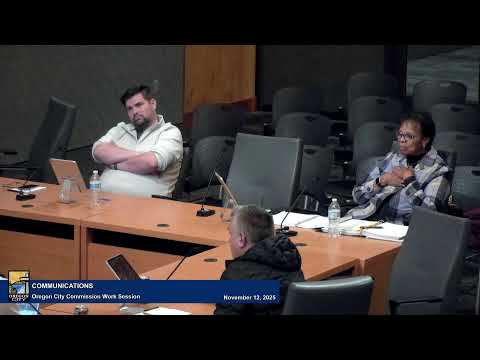
Oregon City commissioners spent a large portion of their Nov. 12 work session discussing revenue options to address a structural imbalance caused by a high percentage of nontaxable property in the city.
Staff summarized existing tools: the Community Safety Advancement Fee (CSAFE), a $6.50 monthly fee collected on utility bills for residential units and via business licenses for nonresidential properties, currently raises roughly $1.1 million for annual debt service tied to a public safety facility. Staff estimated CSAFE revenue grows slowly with new units and that the city now holds about an $800,000 surplus above debt service. The Pavement Maintenance Utility Fee (PMUF) was described as a separate sliding‑scale utility that yields roughly $3.1 million per year and is based on trip generation (ITE manual methods).
Commissioners debated whether to keep CSAFE as-is (and let it sunset when debt is repaid) or to rework methodology so larger contributors pay more. Options discussed included a tiered CSAFE based on square footage or employee counts, a separate new fee following PMUF-style scaling, or targeted levies or bonds for added capacity. One commissioner argued the goal was not simply to raise more revenue but to improve equity in who pays: “It was about changing the methodologies that we currently use,” he said.
Legal and policy limits were noted: current code limits how CSAFE revenues may be used (primarily for public safety facility costs and related administration), and changing either the fee or its permitted uses would require code revisions and possibly voter involvement depending on the approach. Staff also cautioned against accelerating debt pay‑off solely to free up revenues if the current debt interest rate is favorable.
Next steps: staff will return with methodology options to make the fees more equitable (examples to consider: square footage, employee counts, trips) and analyses of impacts and legal constraints. Commissioners flagged the budget cycle as a related venue to address structural imbalance and asked for the fee options to be revenue‑neutral where politically feasible (e.g., lower residential share while increasing larger contributors) or to present a clear public communication strategy if ongoing collections will continue after debt retirement.