Get Full Government Meeting Transcripts, Videos, & Alerts Forever!
Get email alerts on the Downtown Parking topic
No spam. Unsubscribe anytime.
Oregon City to revisit downtown parking limits; staff to return with detailed proposal
Summary
Commissioners debated converting downtown on‑street spaces to longer time limits — likely a 3‑hour core between Fifth and 13th — and asked staff to return with cost estimates, signage plans and outreach to private‑lot owners before formal approval.
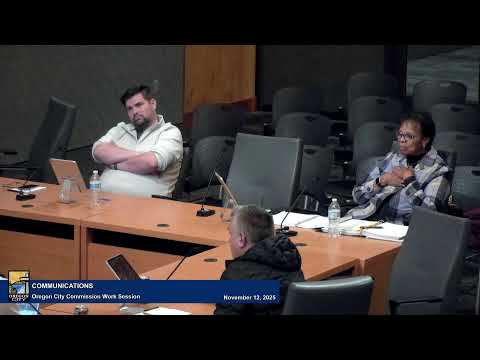
Oregon City commissioners signaled support on Nov. 12 for a plan to change downtown on‑street time limits and directed staff to return with a formal proposal for commission approval.
Staff reported updated parking revenue after the courthouse staff move, saying kiosks recorded $10,169 in October (cash and card) and that hotspot app transactions brought in about $2,800 in September. Staff also said the city’s card processing fee is locked at 1.9 percent. Commissioners heard that about 127 coin meters remain downtown and that converting coin meters or replacing them with additional kiosks could cost roughly $12,800 per kiosk; staff estimated about 15 kiosks would be needed to remove all remaining meters.
“Maybe code enforcement manager Ryan Kersey could talk about a little bit of the history,” staff said while explaining the change to a flat rate when the earlier multi‑zone system created confusion. Commissioners discussed several alternatives: systemwide 3‑hour parking across downtown, a hybrid of 2 hours on Main Street with 4 hours on side streets, or a narrowed three‑hour core. Several commissioners said a single three‑hour designation would be simpler for motorists; others warned it could undermine previous policy that pushed longer‑term parkers to bluff lots to preserve turnover on Main Street.
Commissioner Morrow summarized the compromise that gained traction: “2 on Main Street, 4 on the Side Streets and railroad,” while other commissioners voiced preference for a 3‑hour core. After debate, staff said they would return with maps and an ordinance recommendation; one staff member told the commission, “So we'll bring this back for the commission to approve.”
Commissioners also asked staff to coordinate the change with recent streetscape improvements, consult with the downtown association about outreach to private‑lot owners, and include a cost comparison between private lot rates and the city’s permit options. Staff noted many city permits are sold out (several permit areas nearly full), and that permit prices range (green permits were mentioned around $30–$40 monthly, with some permits up to $60). The commission requested clear signage plans to avoid driver confusion where zone boundaries change.
Next steps: staff will prepare a formal ordinance or options memo, including proposed geographic boundaries (the working area discussed was roughly Fifth to 13th and from 99 to Railroad, with some commissioners preferring Tenth to Fifth as the core), cost estimates for signage and kiosk changes, and a summary of outreach with private lot owners. The item will return to the commission for formal consideration and vote.