Get Full Government Meeting Transcripts, Videos, & Alerts Forever!
Get email alerts on the Active Transportation topic
No spam. Unsubscribe anytime.
Napa Valley Transportation Authority presents countywide active-transportation plan to Saint Helena council
Summary
NVTA staff outlined a countywide active-transportation plan tailored to local chapters, a treatment toolkit, maintenance and funding strategies, and a constrained project list; draft expected to NVTA board Jan/Feb and return to council in March or April. Council and residents pressed on funding, quick-build options, lighting, and NVTA’s role in a separate county climate-action draft.
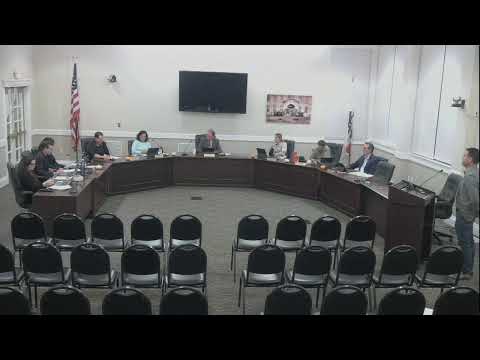
Patrick Ban, representing the Napa Valley Transportation Authority, told the Saint Helena City Council on Oct. 28 that NVTA has combined and updated older pedestrian and bicycle plans into a countywide active-transportation plan with a dedicated chapter for Saint Helena. "We initiated a countywide active transportation plan effort to bring those two older documents together, update them, and ensure they reflect the local priorities of each jurisdiction," Ban said.
Ban described the plan’s main elements: a treatment toolkit for local implementation, mapped inventories of sidewalks and bicycle facilities, a constrained prioritized project list intended for the next five to seven years, and attention to maintenance strategies to ensure long-term sustainability. He said community engagement included pop-up events, a presence at the Saint Helena Harvest Festival, and nearly 200 survey responses. The plan will be available on an interactive map through Oct. 31; NVTA expects a draft to go to its board in January or February and to return to the Saint Helena council in March or April for local adoption.
Council members and residents asked how the plan would move from recommendations to built projects. Ban said the plan does not mandate local expenditures but serves as the "menu" from which jurisdictions nominate projects for state and federal grants, and that NVTA will help jurisdictions pursue funding sources such as the state Active Transportation Program and local discretionary sources like TDA-3. He described implementation strategies to accelerate projects, including expanded class‑3 bike boulevards, "quick-build" treatments using paint and removable plastic delineators, and traffic-calming measures that minimize parking impacts.
On lighting, Ban said the plan emphasizes pedestrian-scale, context-specific lighting and does not recommend widespread in-ground lighting; overhead or human-scale fixtures would be used to improve visibility at conflict points while respecting dark‑sky ordinances where applicable. Ban also confirmed the plan’s definition of "active transportation" includes walking, biking, scooters, wheelchairs and skateboards.
Residents also raised questions about NVTA’s role in the county climate-action draft. Chris Warner asked where NVTA had formally approved the measures that list NVTA as a partner; Ban responded that NVTA is not a formal party to the regional climate-action joint document but is coordinating closely with county staff and may incorporate relevant recommendations into NVTA work going forward.
The council did not take action on the plan at the meeting; Ban encouraged residents to use the interactive map and provide comments before the Oct. 31 deadline. NVTA plans to return with a draft for formal consideration early next year.