Get Full Government Meeting Transcripts, Videos, & Alerts Forever!
Get email alerts on the Property Abatement topic
No spam. Unsubscribe anytime.
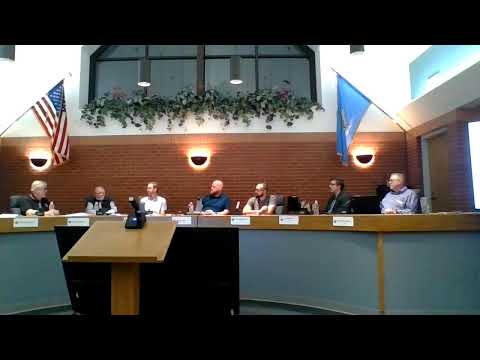
Village Council hears appeal over abatement at property of Donna and Matt Rice Johnson
Summary
The Village Council held a hearing on an abatement appeal brought by residents identified as Donna and Matt Rice Johnson over high grass, weeds and wood structures used in a raised-bed construction; neighbors, the residents and staff debated whether the wood forms constitute discarded materials and discussed realistic completion timelines.
The Village Council considered an appeal on an abatement order for alleged high grass, weeds and discarded construction materials at a property identified in the record as belonging to Donna and Matt Rice Johnson during the meeting's agenda item 5.
Councilmember (Speaker 1) opened the item and invited Ken (Speaker 5) to describe outstanding violations. Ken told the council the primary complaints are 'discarded items' — specifically wood structures used as forms for pouring concrete — that remain in the front yard and driveway. Ken said those wood structures are the items generating the most complaints.
Residents who addressed the council (Speakers 2 and 6) described a raised-bed/planter project they started Sept. 16 and said work was interrupted by a plumbing leak at a rental that required demolition and repair. Resident (Speaker 6) said the dirt used for the garden was purchased and amended and argued that the project is intended to allow the household to grow nutritious food. 'Your purpose is supposed to be to protect that right,' Resident (Speaker 6) told the council. Resident (Speaker 2) added, 'I have the right to put tables in my front yard or in my side yard or on my driveway,' and disputed that code explicitly bars the activities complained of.
A neighbor (Speaker 8) said the dirt pile and concrete forms have been visible for months and reported seeing tables and buckets — and alleged informal exchanges of money for vegetables in the driveway. The neighbor said real estate agents told them the property could depress nearby home values by about $20,000.
Councilmembers pressed staff and the residents on scheduling and enforcement. Staff and residents both described sequencing constraints: city sidewalk work could delay when footings and final pours are possible, while some footing and excavation tasks could proceed before the sidewalk crew finishes. Ken estimated sidewalk crews might finish in about a week, after which footing and form work could proceed; residents said further work could take several additional days or weeks depending on interruptions.
Councilmembers noted a pattern of repeated delays and asked for a clear timeline. The transcript records that an earlier appeal had allowed 60 days; council discussed whether to provide another extension (6–10 weeks was mentioned) and referenced the next meeting date options (November 3 or November 10). The meeting record provided does not include a formal roll-call vote or an explicit final ruling on the appeal. The transcript shows discussion of setting a completion date and of returning the item for further review at a future meeting.
Because no final vote or formal action on the abatement is recorded in the provided transcript, the council's next procedural step on the appeal remained unresolved in the excerpts reviewed. The council and staff confirmed the issue will be revisited at a later meeting for further action or a formal deadline.
The hearing ended with continued discussion of realistic construction sequencing and neighbor concerns; staff and the residents were left to reconcile a practical completion schedule before the council considers any formal enforcement action or further extensions.