Get Full Government Meeting Transcripts, Videos, & Alerts Forever!
Get email alerts on the Student Performance topic
No spam. Unsubscribe anytime.
Principals present 2024–25 student outcomes, highlight reading gains and targeted interventions
Summary
Principals from Boyce and D. G. Cooley elementaries, Johnson Williams Middle School and Clark County High School told the school board that 2024–25 testing showed gains across multiple grades, detailed literacy and intervention programs, and noted areas needing work such as Virginia studies and middle-school transitions.
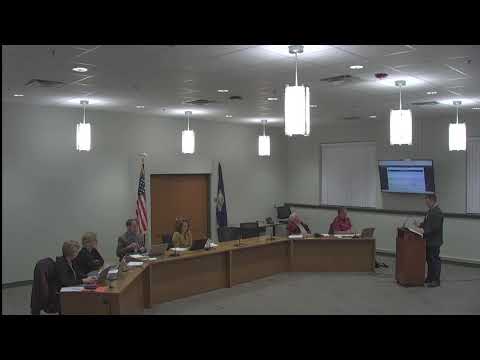
Principals from Clarke County Public Schools presented 2024–25 student performance data at the Nov. 17 board meeting, highlighting districtwide gains and school-level strategies to support struggling subgroups.
Max Merican, principal of Boyce Elementary, said Boyce enrolled 218 students in grades K–5 and reported a third-grade cohort of 49. "We had a really successful school year," Merican said, citing pass rates of 76 percent in reading and 75 percent in math for that cohort and noting a three‑year upward trajectory in overall pass rates, with science rising to a 79 percent pass rate. He flagged Virginia studies as a point of focus, with a 58 percent pass rate, and described local efforts — Heggerty phonemic awareness, a K–2 structured phonics program (UFLY), decodable texts in small groups, co-teaching and benchmark pacing guides — intended to sustain growth.
Molly Tinsman, principal at D. G. Cooley Elementary, reported spring pass rates including a 72.4 percent reading pass rate and 79.5 percent math pass rate in grade 3, and roughly 69 percent pass rates in reading, math and science for grade 5. Tinsman highlighted large year-over-year growth reported by I-Ready assessments — "a 147 percent growth in reading for fifth grade" and similarly large math growth figures — and said the school is using benchmark advance (Steps to Advance) for Tier 3 students and daily specialist interventions for K–3 students identified as high-risk by VALS.
At Johnson Williams Middle School, the principal reported the school is projected to be "on track" for the accountability framework and emphasized a districtwide focus on sixth-grade transitions. Middle school leaders described advisory periods, evidence‑based interventions in reading and math, walk-throughs tied to the Comprehensive Instructional Program (CIP) and ongoing coaching through the Training and Technical Assistance Center (TTAC) to increase teacher practices and student participation.
An unnamed high school presenter summarized the high school's accountability components and readiness measures, noting strong advanced pass rates in some areas and expanded college and career offerings: 20 seniors and 35 juniors participated in dual-enrollment or early-college coursework last year, and the district added new dual-enrollment classes (for example, forensic science) and a full-time English‑learner instructor to meet growing needs. The presenter said about 65 percent of graduates go on to postsecondary institutions.
District staff reminded the board that the state had not yet formally published final accountability labels; provisional figures were shared with the caveat that subgroup performance (if any subgroup falls in the bottom 5 percent) can lower a school's published category by one level. Next steps noted by principals include further use of CIP pacing guides, more frequent data reviews, and continued emphasis on interventions for EL, special education and economically disadvantaged students.
The board heard these reports during the presentation portion of the meeting; no formal action items were adopted as part of the presentations.