Clinton council: minutes, budget tweaks, holiday events and police chief appointment
Loading...
Summary
At its Oct. 7 meeting the city approved minutes, several housekeeping budget amendments including a transfer for a lead-sewer-line project, authorized holiday events and a tractor parade, passed a resolution supporting recurring juvenile-justice funding, and named Adrian Matthews police chief.
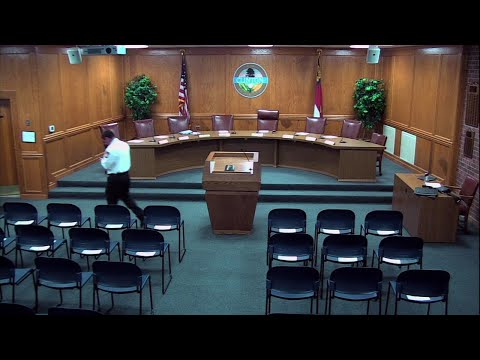
The Clinton City Council handled multiple routine items on Oct. 7, approving minutes and a package of housekeeping budget amendments; authorizing city holiday events; and confirming a new police chief.
Minutes: The council approved the Oct. 7 minutes by voice vote after a motion (mover: Mister Logan; second: Reverend Beckton).
Budget amendments: David (Speaker 9) presented amendments to the operating budget, a transfer from the capital reserve to cover higher-than-expected costs on the lead sewer-line project, and two grant project ordinances tied to water and sewer asset-inventory-and-assessment (AIA) work. Council approved the amendments by voice vote.
Holiday events and parade permissions: Organizers described 'Christmas in the City' events, including a carousel at City Market Dec. 11–13 and a main celebration Dec. 4; council approved closing the City Market parking lot for carousel days and approved a lighted tractor parade on Dec. 11 that will use local streets without full closures and request police support for traffic management.
Resolution on juvenile justice: The council passed a resolution supporting the North Carolina Division of Juvenile Justice and Delinquency Prevention’s request for recurring state funding.
Police chief: The council announced that Adrian Matthews will serve as the city’s police chief; Matthews thanked the council and said his door is open to the public.
All votes on these routine items were taken by voice vote in the meeting and were recorded in the transcript as having passed; no roll-call tallies were provided in the record.