Get Full Government Meeting Transcripts, Videos, & Alerts Forever!
Get email alerts on the High School Scheduling topic
No spam. Unsubscribe anytime.
Clark County High School presents schedule options; staff survey favors keeping 8‑period day
Summary
High‑school leaders reviewed multiple scheduling models (8‑period, 4x4 block, AB alternating block, hybrid, 7‑period) and presented staff survey results showing 77.6% favor for the current 8‑period day. The board asked for a narrowed follow‑up survey and recommended staff return with a recommendation before registration.
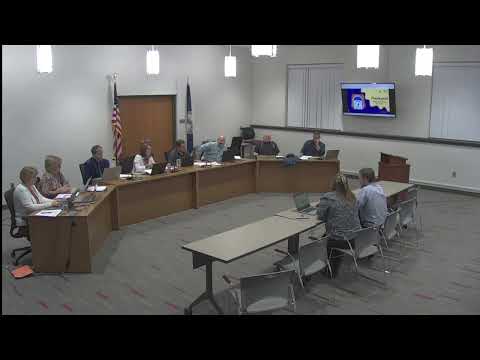
Principal Dana Waring and a high‑school leadership team presented a detailed review of scheduling models to the Clark County School Board on Oct. 20, outlining advantages and disadvantages for student learning, transfer students and offsite partner programs.
Waring described current enrollment (about 675 students) and program offerings including IB, AP, dual enrollment with Blue Ridge and Laurel Ridge community colleges, and internship/apprenticeship opportunities. She said the district considered several models: the current 8‑period day (48‑minute periods), 4x4 semester block with 90‑minute classes, AB alternating 90‑minute block, a 7‑period day and a hybrid that mixes 90‑minute and 45‑minute periods.
Nikki McGinley, the lead school counselor, summarized diploma requirements and noted differences between the advanced studies diploma (26 credits) and the standard diploma (22 credits), and referenced the local IB diploma. Presenters described tradeoffs: longer blocks can support labs and deeper instruction while shorter daily periods increase daily teacher contact and may improve attendance and daily support for students.
Presenters emphasized transfer‑student impacts and external partnerships. Shane Coleman described scheduling conflicts that arise when students attend offsite programs such as Hanley (EMT/firefighting) or Governor's School; presenters said some partners (notably Blue Ridge) have been willing to coordinate but warned that certain hybrid schedules could make partnerships infeasible.
Staff shared spring survey results of faculty preferences: 77.6% wanted to retain the current 8‑period model and an additional 69.4% listed the 8‑period day as a top comparative preference when multiple models were presented. Presenters noted concerns for IB and AP testing timelines under semester block models and cautioned about complexity for transfer and special‑education students.
Board members asked clarifying questions about class size impacts (e.g., PE and lab classes), teacher prep loads, and options to provide flex or remediation time for students who struggle. Members suggested repeating the staff survey with two or three narrowed options (for example AB vs 8‑period vs 4x4) rather than many split choices to get clearer guidance.
No scheduling model was adopted Oct. 20. The panel recommended the board consider faculty input, external partner needs and registration timelines, and return next month with a refined survey and a potential recommendation to guide course registration.
The board directed staff to summarize the models concisely, present the survey results to faculty and bring back a recommendation along with any operational impacts on partnerships and student supports.