Get Full Government Meeting Transcripts, Videos, & Alerts Forever!
Get email alerts on the Family Life Education topic
No spam. Unsubscribe anytime.
Clark County board hears wide public comment on Family Life Education; staff report strong survey support
Summary
At the Oct. 20 board meeting, dozens of residents spoke for and against the Family Life Education (FLE) curriculum. Staff reported roughly 78 unique survey responses with 70 in favor; the board agreed to identify specific standards of concern and consider broken‑up adoption (high school, middle, elementary) at a future vote.
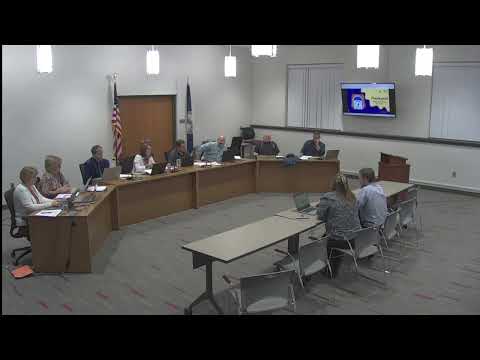
Dozens of residents addressed the Clark County School Board on Oct. 20 as the district moved closer to deciding whether to implement a Family Life Education curriculum that was approved by the board in 2019 but has not been widely taught.
Amy Martin, a parent, told the board that the curriculum is "not radical" and is state‑mandated; she urged the board to implement the lessons that were approved six years ago. "Let's stop asking kids to wait for knowledge that they needed yesterday," Martin said, arguing the curriculum teaches safety, consent and basic biology in age‑appropriate ways.
Other speakers framed the issue differently. Mary Veloux, a Berryville resident and grandparent, said schools should prioritize academics and that "family is the primary teacher"; she questioned how opt‑outs would be tracked and said removing students for lessons would single them out. A speaker identifying as Tara expressed similar concerns about the burden on teachers and the social effects on pupils who opt out.
School staff and other parents told the board they support teaching the standards. Kris Kliffer, a member of the school health advisory board and a former teacher, said she reviewed the grade‑level standards and supports implementing FLE to teach relationships, online safety and reproductive health while preserving parental opt‑out rights. Parent Carrie McKenna reminded the board that FLE aligns with Virginia standards of learning and said local educators helped draft the lessons.
During a staff presentation later in the meeting, Jessica Nail and Patrick Kasman — co‑chairs of the Family Life Education Committee — summarized community feedback and a reopening of the district survey. They reported roughly 82 raw survey submissions (about 78 unique after removing duplicates), of which 70 were categorized as in favor of the curriculum (89.7%) and eight as opposed (10.3%). Nail said the committee also prepared opt‑out forms broken down by lesson and grade so families could opt out of specific lessons rather than the entire unit.
Board members pressed staff for specifics: which standards they consider inappropriate at elementary or middle school grades, what community resources would be shared with students, and how large numbers of opt‑outs would be handled in practice. Staff said many standards overlap with existing health, PE and social‑emotional learning lessons and that community resources primarily consist of counseling and mental‑health referral options. On abortion specifically, staff said "no" — the community resources referenced in the FLE materials do not include abortion referral; they described resources as mental‑health and student support services.
The board did not vote on adoption on Oct. 20. Several members said they would welcome breaking the decision into parts (for example, adopting the high‑school portion first or approving high and middle grades while delaying elementary), and they asked staff to identify exact standards that concern trustees so the board can consider edits or staged adoption at the next meeting.
The next procedural step the board outlined was to collect and flag the specific lesson standards that trustees want edited or removed, and then to place an adoption motion (all, partial or none) on a future agenda. The district also indicated it would continue refining opt‑out language and clarifying communications to families.
For now, the board left the question open with a clear path: staff will return with itemized standards of concern and the board will consider a targeted adoption vote at an upcoming meeting.