Get Full Government Meeting Transcripts, Videos, & Alerts Forever!
Get email alerts on the Commercial Contracts topic
No spam. Unsubscribe anytime.
Commercial appeal over $9.2M equity component tests voluntary‑payment and fraud claims
Summary
Boston Laser argued the trial court erred by granting summary judgment to Provident, saying an invoice and valuation were fraudulent or the result of a mutual mistake; Provident said the parties knew the $9.2 million EEA component and voluntarily paid. The court took the case under advisement.
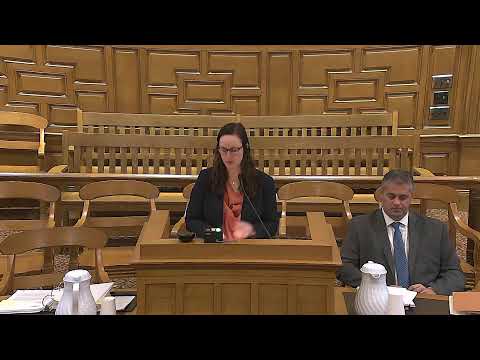
In Provident Healthcare Partners LLC v. Boston Laser Eye Institute, the panel considered competing arguments about whether a trial court properly applied the voluntary‑payment doctrine after closing in a private sale transaction.
Counsel for Boston Laser argued that the invoice at issue sought payment of amounts not due and that either mutual mistake or fraud excused a voluntary‑payment defense. Attorney Chris Marino said the equity‑equivalent agreement (EEA) component valued at $9.2 million and the $23 million enterprise valuation were misunderstood by the seller and that contemporaneous documents and post‑closing appraisal evidence create factual disputes for a jury.
Provident’s counsel, Christine Kingston, said the $9.2 million figure and the makeup of the purchase price were memorialized in the letter of intent and the closing documents and that Boston Laser voluntarily accepted the deal and payment structure. Provident argued an appraisal submitted later does not negate that both sides accepted the valuation and that an invoice dispute absent evidence of intent to deceive does not amount to fraud.
The panel questioned what contemporaneous evidence contradicted the stated $9.2 million EEA number and whether internal emails about escrow created a plausible inference of fraudulent intent. After argument the court took the matter under advisement.
Key figures referenced at argument included an enterprise valuation of $23 million, an upfront cash component and promissory note, and an EEA figure of $9.2 million; counsel also discussed later appraisals valued near $2.9 million and escrow amounts referenced in briefing.