Get Full Government Meeting Transcripts, Videos, & Alerts Forever!
Get email alerts on the Civil Commitment topic
No spam. Unsubscribe anytime.
Appeals court hears challenge to verdict keeping Antonio Maderas confined
Summary
At oral argument, defense counsel said the Commonwealth presented insufficient evidence that Antonio Maderas remains a dangerous person, while prosecutors said retained experts and the verdict supported continued commitment; the three‑judge panel took the case under advisement.
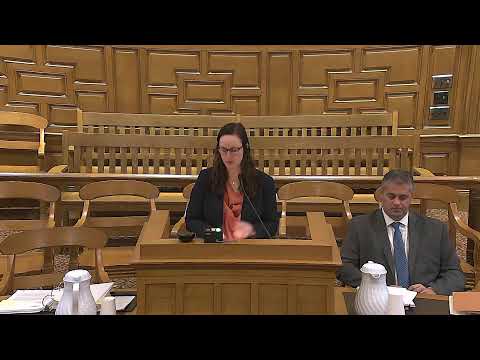
A three‑justice panel of the appeals court heard arguments over whether the record supports continuing civil commitment for Antonio Maderas. Defense counsel Fred Burkholder told the court the Commonwealth failed to present evidence that would allow a reasonable jury to conclude Maderas remains a dangerous person requiring confinement.
“Commonwealth failed to present sufficient evidence for a reasonable jury to conclude…that [he] continues to suffer from a mental illness or abnormality…that causes him to have a serious difficulty in controlling his behavior,” Burkholder said, arguing the record shows treatment progress, a current OBR score of 5, and no antisocial incidents in recent years.
The panel pressed on whether those improvement points were matters for the jury to weigh. The judges noted that the trial involved testimony from multiple qualified examiners and asked why that testimony should not be dispositive. Burkholder urged the panel to review the legal sufficiency of the evidence despite waiver issues and acknowledged the substantial‑risk‑of‑miscarriage‑of‑justice standard the court applies on appeal.
Assistant district attorney Jean Holmes, representing the Commonwealth, responded that there is no cause to disturb the jury’s verdict. “The jury considered this entire case, both the cross as well as the direct examination of the retained experts,” Holmes said, adding that cross‑examination affected some opinions but that the retained experts ultimately bolstered the Commonwealth’s case.
The panel, which includes Justices Seok Kyung Shin, Paul Smith and presiding Justice Ariane Bueno, asked follow‑up questions about the effect of past institutional behavior reports and the weight to be given competing expert testimony. After argument the court said it would take the case under advisement.
Next steps: the appeals court will issue a written decision after the judges deliberate.