Get Full Government Meeting Transcripts, Videos, & Alerts Forever!
Get email alerts on the Budget topic
No spam. Unsubscribe anytime.
Cromwell finance liaison outlines $40.6 million education budget, warns on mill-rate effects
Summary
John Ireland of the Board of Finance presented a town-level budget primer showing the Board of Education budget at $40.6 million, explained how that feeds the mill rate (current 27.33) and the timetable for the town referendum; members asked questions about borrowing for the new middle school and surplus management.
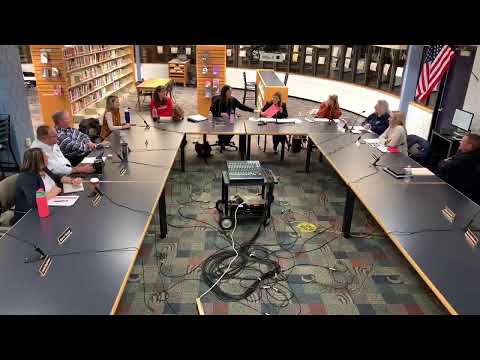
John Ireland, speaking as liaison from the town's Board of Finance, gave board members a step-by-step overview of how Cromwell's budgets are structured and what to expect in the coming months.
Ireland told the Board that the education piece represents roughly 61% of the town's tax revenue and that the district's total operating budget for the year is $40,600,000. "Your total operating budget for this year is $40,600,000," he said. He explained the three major budget "buckets" (education, general government and bonded debt), described revenue sources (local property taxes and state aid), and emphasized the mill-rate calculation used to apportion the tax burden; he said the current mill rate is 27.33.
Using an example, Ireland showed how relatively small changes in revenue needs translate into mill-rate adjustments and higher tax bills. He explained that an additional $2 million in revenue needs would move a hypothetical mill rate from 27.33 to 28.38 in his illustration and gave a homeowner-level example of the effect on a sample tax bill.
Ireland also discussed the town's recent middle school bond and said the town secured favorable terms and retained an S&P triple-A rating. In questions following the presentation, board members pressed him on borrowing details and surplus fund management; Ireland said the district borrowed about $42,000,000 for the middle school at a rate just over 4% on a 30-year term and that some investment income arises year to year from construction draw schedules and bond timing.
Ireland walked the board through the local timeline: budget books distributed in March, presentations to the Board of Finance in March/April, the referendum on the first Tuesday in May and the mill-rate setting shortly after a successful vote. He encouraged board members to consult the Board of Finance and finance staff with questions as the budget season approaches.
The presentation was intended as a primer for newly elected board members and prompted follow-up requests for orientation materials and a suggested CABE (Connecticut Association of Boards of Education) workshop for school finance.