Get Full Government Meeting Transcripts, Videos, & Alerts Forever!
Get email alerts on the Project Labor Agreement topic
No spam. Unsubscribe anytime.
Cumberland committee hears heated arguments over project labor agreement study, takes no action
Summary
After nearly three hours of public testimony and opposing legal presentations, the Cumberland School Committee declined to authorize an independent feasibility study into using a project labor agreement (PLA) for the B.F. Norton school project, citing timing, potential delay and funding risk.
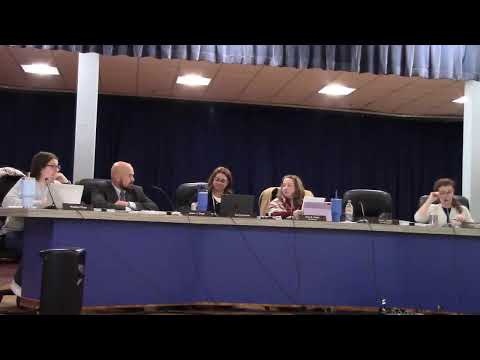
The Cumberland School Committee on Oct. 23 heard extensive public comment and competing legal presentations on whether to commission an independent feasibility study to assess adopting a project labor agreement for the B.F. Norton school construction project, but the committee ultimately took no action on authorizing the study.
Proponents — including Greg Mancini, executive director and general counsel for BuildRI, and Michael Sabatoni of the Rhode Island Building and Construction Trades Council — urged the committee to order an objective analysis, stressing PLAs can secure a broad, trained labor pool, boost safety and reduce the risk of labor stoppages. "We are not here, asking this committee to authorize a project labor agreement. We are asking this committee to actually objectively analyze it," Mancini told the panel.
Union representatives and workers who testified said PLAs protect wages and benefits, create apprenticeship and pre-apprenticeship opportunities for local residents and reduce incidents of wage theft. "PLAs ensure the protection of the workers," Alvin Reyes (IBW Local 99) testified, and a recent graduate, Isaac Valera, described how such work opportunities could keep local trainees working in Cumberland.
Opponents, led by attorney Chris Whitney of Pierce Atwood, urged caution. Whitney said Mancini's materials arrived late and argued the project likely does not meet the Rhode Island Supreme Court (URI) standard that justifies imposing a PLA. Whitney warned that commissioning a study now could produce weeks or months of delay, lead to renegotiation of the guaranteed maximum price (GMP) with the construction manager, force subcontractor substitutions and risk missing a June 2027 substantial-completion deadline tied to RIDE (Rhode Island Department of Education) reimbursement. Whitney said those consequences could jeopardize roughly $22 million in expected reimbursements if the project misses required deadlines.
Committee members expressed frustration with the timing and complexity of the issue. Several members said the PLA debate emerged late in the project's planning, and one member warned that asking for a study at this stage risked harming the project's schedule and budget. The record shows roughly 60–66% of the project had been ‘‘bought out’’ by the construction manager at the time of the meeting; presenters estimated overall union participation on awarded packages in the range of 80–90 percent.
Two members recused themselves from PLA discussions before the presentations: Ms. Smith disclosed a conflict relating to a son employed by unions working on school construction; Mr. Bacon reiterated a previously announced recusal.
After the presentations and committee questions, the chair asked whether there was a motion to authorize the feasibility study; no motion was made and the chair said she would take that as 'no action.' The meeting adjourned at 9:14 p.m.
What happens next: the committee left the matter unresolved. Proponents at the meeting urged the school committee to commission an objective study in line with other Rhode Island districts that have used such analyses; opponents warned that late-stage study or adoption could cause delay, additional cost and legal exposure. The issue may reappear at a future meeting if a member brings a motion to commission a study.