Get Full Government Meeting Transcripts, Videos, & Alerts Forever!
Get email alerts on the Hb 812 topic
No spam. Unsubscribe anytime.
Georgia subcommittee hears split testimony on HB 812, a bill to speed land‑disturbance permitting
Summary
A state subcommittee heard hours of testimony on HB 812, a bill that would tighten review of local building‑code amendments and impose review deadlines for land‑disturbance permits. Builders said the measure would cut months from reviews and lower housing costs; local governments and conservation groups warned timelines could force rushed approvals or denials and harm water resources.
Representative John Chokas introduced House Bill 812 to the State and Local Government Subcommittee as a two‑part effort to reduce permitting delays and tighten review of local amendments to Georgia’s mandatory building codes. "We're trying to assist the Department of Community Affairs in looking at and more stringently, making sure that our local governments abide by the laws," Chokas said as he opened the presentation.
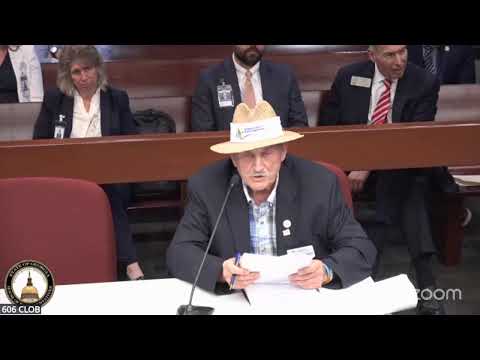
Austin Hackney, executive vice president of the Home Builders Association of Georgia, told the panel the bill would not remove local control but would add teeth and transparency to existing state processes. Hackney described part one as strengthening how local amendments to statewide codebooks get vetted and part two as imposing a shot clock on land‑disturbance permit (LDP) reviews: an initial 45‑day review and a shorter window for subsequent rounds. He told lawmakers, “these comments have to come in a single round,” arguing that single‑round comment cycles would prevent indefinite restarts that can extend an otherwise 45‑day process into years.
Builders and developers who testified said drawn‑out LDP reviews are already raising costs and shrinking supply. Jay Knight of the Georgia Residential Land Development Council said multiple subdivision projects that were already zoned still took 12–18 months to get LDPs, delaying work and increasing carrying costs. Developer Mark Ivy and others offered similar case studies; one developer told the committee that multi‑round reviews on a 66‑lot project added roughly $250,000–$350,000 in delay costs. "The reality is if we leave it like it is, 70% of Georgians can't afford a home," said one builder who testified in favor of the measure.
Speakers for municipalities and counties urged more caution. Representatives of the Georgia Municipal Association (GMA) and the Association County Commissioners of Georgia (ACCG) said many local issuing authorities already meet or beat the proposed timeframes for straightforward projects, but the bill’s 45/14 structure does not distinguish simple residential jobs from complex, multi‑department or multi‑agency developments. "The permitting process is not being used or weaponized in any form or fashion," Noah Reynetz of GMA said, and he warned that treating all LDPs the same would risk either blanket denials for incomplete submissions or rushed approvals that could overlook environmental or public‑safety issues.
Local administrators and elected soil‑and‑water supervisors emphasized environmental stakes. Several conservation witnesses, including a Flint Riverkeeper representative and soil‑and‑water supervisors, told the committee LDP reviews frequently must address erosion control, state waters determinations and coordination with agencies such as the Environmental Protection Division (EPD) or the U.S. Army Corps of Engineers. They recommended longer second‑round review windows (30–45 days) and stronger requirements that applicants submit a complete application before the shot clock starts. As one speaker representing riverkeepers said, "Relaxing this regulatory structure is a bad move for private property values and Georgia's waters."
Economic context featured in testimony from Dr. Jerry Parrish, chief economist for the Metro Atlanta Chamber, who presented data showing population growth outpacing housing permits and noted one in four renters in Georgia face severe cost burden (paying 50% or more of income in rent). Greg Heller of Guidehouse gave a national perspective, noting similar bottlenecks in other states and offering policy options such as calibrated shot clocks (different timelines by project complexity), third‑party reviewer backstops when an issuing authority misses a deadline, and infrastructure grants tied to pro‑housing local policies.
Lawmakers asked for clarifications: multiple members sought written guidance from DCA about whether the bill would expand the department’s duties or simply clarify existing authorities and whether additional funding would be necessary. Supporters said the statutory framework and the State Codes Advisory Committee already exist; municipal representatives said their offices must often coordinate with state or federal agencies and recommended explicit exceptions and definitions for "complete submittal." Several committee members asked staff to work with stakeholders on amendments that would define application completeness, build in exceptions for third‑party agency delays, and consider proportional timelines by project type.
No formal action was taken in the subcommittee. Chairman Anderson closed public testimony and said staff would follow up with the Department of Community Affairs and interested stakeholders before the bill reaches the full committee.
The subcommittee’s next steps were not announced at the hearing; lawmakers indicated they expect to consider technical amendments to HB 812 that would seek a balance between predictable review timelines and protections for complex environmental and infrastructure reviews.