Get Full Government Meeting Transcripts, Videos, & Alerts Forever!
Get email alerts on the Arbor South topic
No spam. Unsubscribe anytime.
Council pulls Arbor South items as debate continues over public financing and city-owned parking
Summary
Council removed Arbor South Brownfield and development-agreement items from the Nov. 17 agenda after council members and public speakers raised questions about the project's financing, including use of TIF and the city taking ownership of three parking structures. Public commenters and council members offered competing views on jobs, affordability and risk.
The Ann Arbor City Council removed key Arbor South items from its Nov. 17 agenda, citing the project's complexity and ongoing proposed modifications. The items pulled include the Brownfield plan and the related development agreement, steps that would have advanced a public review process for the Arbor South project.
Supporters at the meeting argued the project would bring jobs and affordable housing. Robert Malcolm Sr., a 50-year member of Laborers Local 499, said the development would create ‘‘hundreds of jobs for members of the laborers and hundreds more for the allied trades’’ and add roughly 200 affordable units.
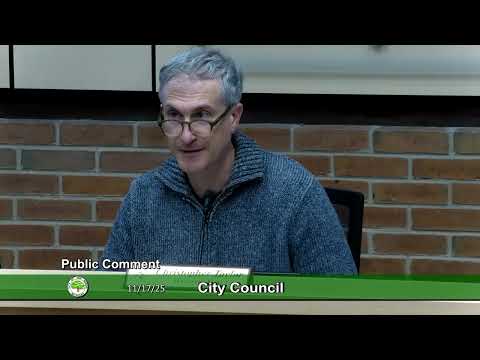
Other speakers and some council members raised financing concerns. Alex Lowe, calling in, called DS2—the financing element discussed in public testimony—a ‘‘poison pill,’’ arguing that large city-backed bonds (he cited $166,000,000) and city ownership of parking could shift risk to the public while leaving private profits with the developer. Eric Ivancich said he could not support the current structure because it asks the city to ‘‘own, operate, and maintain three parking structures that serve primarily, if not exclusively, this private development.’’ He urged that public investment be directed to district-wide infrastructure such as transit, water and sewer instead.
Council member Dish described the project's aim to implement the city’s 2021 transit-corridor zoning and provided the council's summary figures: she said the developer would invest over $400 million and that Brownfield tax-increment financing would provide approximately $346 million in public funding. Dish described three parking structures providing about 2,476 spaces, roughly 1,000 new housing units (with 209 permanently affordable) and about 100,000 square feet of new retail. She acknowledged concerns about the city owning and maintaining parking but said TIF reimbursement and the financing structure were necessary to make the project financially feasible.
The council did not vote on Arbor South at the meeting. Council members and staff indicated additional work remains to resolve outstanding financing and risk-allocation questions before the item returns for public hearing or formal action.
What happens next: staff and the developer will continue to negotiate changes; if the project is ready, the DDA expects to present the statutory first step to council at its Dec. 15 meeting, which would set a public hearing and begin the formal statutory process described by staff.