Get Full Government Meeting Transcripts, Videos, & Alerts Forever!
Get email alerts on the Affordable Housing topic
No spam. Unsubscribe anytime.
Grand Forks school board approves 20-year, 90% tax pilot for Brookstone Apartments after lengthy debate
Summary
The Grand Forks Public Schools Board voted 7–2 to approve a 20-year, 90% payment-in-lieu-of-taxes (pilot) for the 160‑unit Brookstone Apartments, a roughly $33 million affordable housing project backed by LIHTC and state housing funds; supporters cited housing shortages, opponents raised budget and process concerns.
The Grand Forks Public Schools Board approved a 20‑year, 90% payment‑in‑lieu‑of‑taxes (pilot) for the Brookstone Apartments on Nov. 24, passing the motion 7–2 after more than an hour of presentations and questions.
Supporters said the 160‑unit project, estimated at about $33 million, would expand affordable rental options for teachers, military families and other workforce households and bring a dedicated on‑site space for service coordinators that community partners could use at no cost. Developer Curtis Regan said the request for a 90% pilot is driven by a remaining financing gap after securing federal low‑income housing tax credits and state Housing Incentive Fund assistance: "We're asking for 20 years 90% pilot" he said during his presentation.
Red River Community Housing Development Organization executive director Lisa Ratvold presented the market study used for financing applications, telling the board that about 44% of renters in Grand Forks are cost‑burdened (paying more than 30% of income for housing) and that an independent study of some 80 local properties found the project would not have a negative impact on existing rentals. Ratvold described the financing puzzle for tax‑credit projects and noted program rules that restrict rents and require compliance monitoring.
Opponents and cautious members raised procedural and fiscal questions. Public commenter Bob Cowger urged a no vote, saying the district should fix its own budget before supporting developer incentives and citing past city tax exemptions. Several board members sought specifics about projected property‑tax revenues, phasing and whether the pilot could be negotiated so the school district received a different share. Brandon (district staff) explained the city provided the packet calculations and that the district currently collects roughly $62 per year on the undeveloped lot; with the proposed project and pilot in place the packet estimated the district's share would rise to roughly $23,300 in year one (illustrative).
Board members also pressed developers on ownership and cash‑flow structure. Regan described typical LIHTC ownership: an investor (for example, a large bank) takes a majority ownership interest while the developer remains general partner with a deferred fee, and compliance requirements limit owner profit and include reserve requirements.
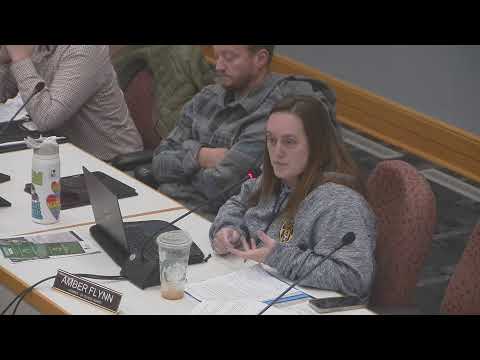
The roll call on the pilot motion produced the following votes: Larson — Yes; Cleven — Yes; Lund — Yes; Manley — No; Anderson — Yes; Hodak — No; Flynn — Yes; Berger — Yes, for a 7–2 outcome. The motion passed.
What happens next: the pilot is structured as a payment in lieu of taxes tied to affordability rules and to come off if units convert to market rate; the project team said some funding sources remain under negotiation (HIF) and the developer said the project may be phased as two 80‑unit segments depending on funding timelines. The board flagged process questions and committed to reviewing a clearer rubric for future tax‑incentive requests.