Get Full Government Meeting Transcripts, Videos, & Alerts Forever!
Get email alerts on the Land Use topic
No spam. Unsubscribe anytime.
Muskegon commission advances rezoning tied to Fisherman’s Landing–Mart Dock land‑swap amid strong public pushback
Summary
The City Commission voted to advance rezoning steps tied to a proposed land swap between Mart Dock and Fisherman’s Landing, setting a second reading despite widespread public opposition focused on campground preservation, public access and financing. The rezoning move does not itself change campground operations, which would remain in place unless the commission later acts otherwise.
The Muskegon City Commission on Nov. 10 voted to advance a second reading of a rezoning ordinance linked to a proposed land swap that would transfer parts of Fisherman’s Landing to Mart Dock in exchange for land at the Mark Dock site.
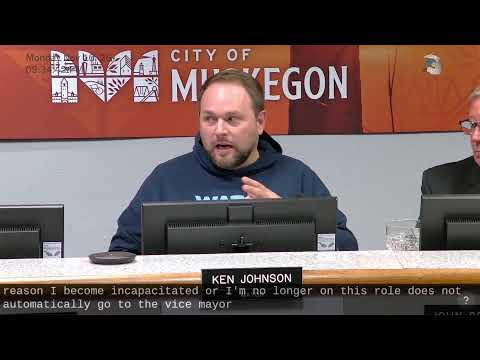
The measure, which passed on a 4–3 roll call, starts a process that would take rezoning and an updated development agreement to a future vote. Mayor Johnson and four other commissioners supported moving the item forward; three commissioners opposed it and said more detail and stronger guarantees for public access and campground protections are needed before the commission takes final action.
Why it matters: The swap is framed by city staff and supporters as a way to consolidate industrial port activities in one area while freeing the waterfront to be developed for mixed uses, jobs and improved public access. Opponents — including neighborhood residents and petition organizers — said rezoning before a binding development agreement risks turning a long‑used public campground into industrial uses and questioned whether promised public‑access improvements are sufficiently secured.
What the commission heard: More than a dozen residents addressed the commission during public comment, several citing a Change.org petition with many signatures and urging a “no” vote. Dr. Mark Paletti, a longtime local commenter, said the proposal “is capricious” and urged protection of the campground and green space. Other residents warned the project budget and environmental approvals for potential dredging and hardened dock areas remain unclear.
Developer and staff response: Mart Dock representative Mike Hausman told the commission his team has revised plans and said the hotel and waterfront projects include public‑access elements; he said his architect has submitted updated drawings and ‘‘I’m told by my architect we have 13 accessible rooms’’ to address ADA requirements. City staff and the city manager stressed the item being advanced is only a step in the process: the rezoning would be considered alongside a final development agreement at a later meeting and the city — as owner of Fisherman’s Landing parcels involved in the swap — could rezone the land back if the swap did not complete.
Legal and procedural context: Staff said rezoning the parcels now keeps the grant and regulatory timeline intact (certain grants require the applicant to control and zone property appropriately). Commissioners who opposed the motion argued that rezoning in advance of a final, written development agreement is premature and risks creating legally nonconforming uses; supporters said the city controls the property and can reverse the rezoning if necessary.
Next steps: Because the measure did not receive unanimous approval, it will return for a second reading and public hearing. The commission and staff said they expect to bring a revised development agreement to that later meeting so commissioners will be able to consider zoning and contractual commitments together.
What remains unresolved: Residents pressed for clear, enforceable timelines for public‑access improvements, commitments on parking and easements to the lake, and explicit environmental safeguards including dredging contingencies. Commissioners opposing the rezoning asked staff to provide more concrete documents and community input before a final vote.
The commission concluded the meeting by moving the rezoning to a second reading; no final land‑swap or development agreement was executed at the meeting.