Get Full Government Meeting Transcripts, Videos, & Alerts Forever!
Get email alerts on the Snap Benefits topic
No spam. Unsubscribe anytime.
Governor Stitt urges churches, partners to step in as SNAP benefits face halt after federal shutdown
Summary
Governor Stitt warned that the federal shutdown could stop SNAP replenishments on Nov. 1, gave shortfall estimates for Oklahoma, and urged churches, nonprofits and county partners to sign up at beaneighbor.org while state agencies plan contingency options.
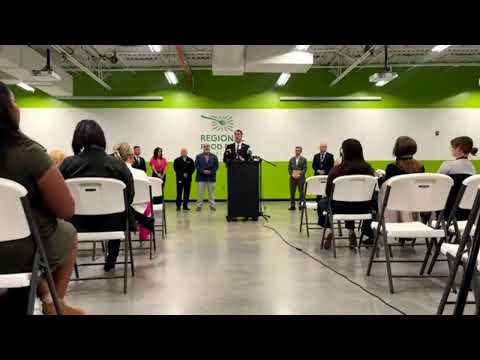
Oklahoma Governor Stitt said at a press conference that, because of the federal government shutdown, "SNAP benefits will not be replenished by the federal government on November 1," and urged Congress to pass a clean continuing resolution to restore funding.
Stitt told reporters the state has been calculating possible impacts and gave top-line shortfall estimates: about $205,000,000 affecting Oklahoma in November and a minimum of $4,850,000,000 if the shutdown continues into December. He framed the loss as a federal problem and said Oklahoma is coordinating with its federal delegation, state agencies, the legislature and nonprofit and faith partners to reduce harm to families.
Why it matters: SNAP is a major federal nutrition program for low-income households. The governor said the state will not assume indefinite federal reimbursement for state-funded backstops and cautioned that tapping reserves carries legal and logistical constraints.
Stitt described several immediate steps and referrals. He urged residents and faith groups to register at beaneighbor.org to find churches, food banks and local organizations ready to provide emergency boxes and meal support. He also suggested residents consider buying extra groceries for donation to support local stores and food banks that may face reduced SNAP-driven sales.
Pastor Cody Anderson, who introduced himself as "the senior pastor" of his fellowship, described local church efforts to prepare emergency food boxes and coordinate deliveries. Anderson urged churches to prepare emergency policies and shared a scale example: "If 5,000 churches ... began to put together 15 boxes of emergency food, and they do that twice a month," they could significantly reduce pressure on food banks, he said.
On questions about individual help, Stitt read a caller's concern from "Casey," a mother of four in Edmond, and said he was optimistic Congress would act to reopen funding. He directed families to local resources while contingency plans continue, saying, "I think it's gonna get solved," and again pointing callers to beaneighbor.org for immediate help.
Stitt acknowledged limits on using state savings. He said Oklahoma's rainy day fund was "close to 1,000,000,000 dollars" and referred to it as constitutionally maxed, but explained that accessing portions of reserves is constrained by state rules; he said roughly $300,000,000 was a cited access figure and that deploying reserves would likely require legislative action or a special session and a two-thirds vote.
The governor also noted possible shortfalls in other programs and referenced childcare funding and WIC, saying WIC was not disrupted at the time of the briefing. He asked staff and partner organizations to monitor card distribution and delivery logistics and said state officials are exploring home delivery and county-based distribution for residents in rural areas.
The press conference ended with Stitt reiterating appeals to Congress for a clean CR and asking Oklahomans, churches and nonprofits to "step up" to support neighbors while the federal impasse continues.