Get Full Government Meeting Transcripts, Videos, & Alerts Forever!
Get email alerts on the Ballot Question topic
No spam. Unsubscribe anytime.
Phoenix Elementary District frames ballot question on leasing unused property as revenue tool; leaders say it won’t close schools
Summary
Board leaders said a proposed ballot question would allow long-term leases or exchanges of unused district property to generate revenue for student programs without new taxes, and they repeatedly denied the measure is a pathway to school closures.
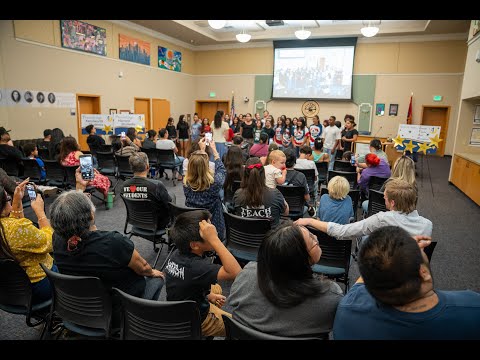
Carmen Trujillo, governing board president of Phoenix Elementary District (4256), said the board placed a ballot question on the agenda to allow the district to enter long-term leases or otherwise manage unused and underused school properties to generate “long term revenue streams” that would support student programming without raising new taxes.
"A yes vote gives the district the flexibility to use our properties to generate long term revenue, long term revenue streams that, directly impact our students without without creating new taxes," Trujillo said during the board recap.
Superintendent Deborah Gonzales and Trujillo both addressed concerns that the ballot question could be a step toward closing schools. Gonzales said the board heard that confusion from members of the public and board colleagues; in response she said, "We aren't going to close schools." Trujillo added, "The governing board does not intend to sell district properties, but we wanna seek voter approval to be able to enter into long term leases of our unused and underused school properties." She noted that closing schools requires a separate public hearing under state statute.
The discussion was paired with the district's fiscal review. Trujillo said the district's Annual Financial Report (AFR) for 2025, presented to the board by Mr. Whittle, showed 88% of maintenance and operation funds were directed to supporting student learning. She also described a funding gap from the federal ESSER program: "The end of the ESSER grant created a loss of $8,000,000 in grants," she said, adding the district is carrying a $1,300,000 budget-balance forward and plans to grow that reserve toward a 10% target.
Gonzales explained the district's budget cycle and audit process, noting the initial budget submitted to the state in July is a projection and a December revision updates figures once enrollment and days attended are confirmed. She and Trujillo urged clarity for voters that the ballot item is intended to provide flexibility for property use and revenue generation — not to mandate school closures.
The board did not take a formal vote on the ballot language during this recap; next procedural steps for placing the measure before voters were not specified in the presentation. The district asked community members to monitor its website and social media for updates and posted information about upcoming public roundtables and sessions where the measure and district finances can be discussed further.