Get Full Government Meeting Transcripts, Videos, & Alerts Forever!
Get email alerts on the Commodity Planning topic
No spam. Unsubscribe anytime.
Tennessee Department of Agriculture outlines commodity-planning calendar, procurement rules and DOD Fresh sign-ups
Summary
TDA staff explained how school food authorities should complete the commodity planning worksheet, the March 1 worksheet deadline, entitlement calculations (TMAC lunches × $0.45), procurement attestation requirements, and steps to sign up for the DOD Fresh produce program; presenters urged districts to document missing orders so TDA can pursue reimbursements from processors.
Jean Trimbo of the Tennessee Department of Agriculture walked school food authorities through updates to the agency’s commodity planning worksheet and the procurement steps that inform next year’s USDA Foods orders. Trimbo said TDA plans to post the worksheet and supporting documents on the DOE listserv by mid‑January and reminded districts that the worksheet is due March 1, with fruit-and-vegetable ordering starting in March and bulk ordering continuing through the first three weeks of April.
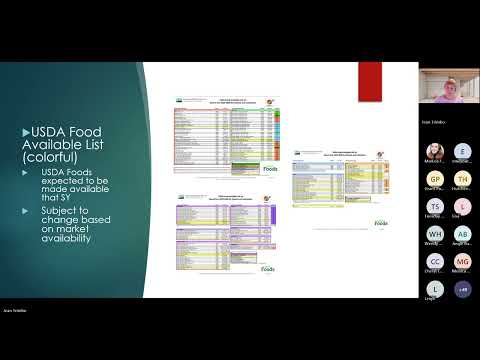
The webinar stressed two practical deadlines that affect district budgeting: TDA expects the USDA Foods Available List and a new price list to be released in December or early January, and entitlement dollars for next year will be calculated as each school’s reported TMAC lunches multiplied by $0.45. "TMAC reported lunches times 45¢ equals the total entitlement dollars," Trimbo said, adding that monitoring entitlement throughout the year helps districts avoid overspending.
Trimbo reviewed required documentation. SFAs must return an annual processing statement and attest that their solicitations identified evaluation factors and produced documented awards; rollover or contract renewals are permitted only when original bid language expressly allows renewal. She also reminded districts that bulk USDA food pounds requested must be accurate and will be used no later than Sept. 30, 2026, after which unused pounds will be carried back to the state account.
Specific worksheet changes aim to improve small-district participation and reduce confusion. Trimbo showed new orange update fields, added contact-name, email and phone columns, and added two direct-delivery lines and two processor lines intended for additional products that might be ordered schoolwide. A new truckload column will let smaller districts see when they collectively meet a truck’s minimum; the spreadsheet is locked except for four editable lines and automatically calculates total quantities and dollars. Trimbo noted where districts should place DOD fresh-produce dollars on the sheet (cell G11) and warned, "The balance should never go negative."
The department also pointed districts to pricing resources: the USDA Foods average material price (processor material prices) and the WBSCM catalog, explaining that processor bids and awarded contracts determine actual prices. Trimbo recommended using the materials report to find pack sizes, case weights and estimated price-per-pound when completing worksheet entries.
On program sign-ups and troubleshooting, Trimbo and Grant Puls described the Defense Logistics Agency–USDA partnership that supplies fresh produce to schools (the DOD Fresh program) and urged districts to contact TDA representatives — Grant, Jean, or Shontay Russell — to enroll or report problems. Multiple participants reported delays and gaps in processor portals; Trimbo said TDA will document complaints and follow up with warehouses and processors.
Several schools raised incidents in which items their district ordered were taken by another district through processor portals. Trimbo relayed that, according to processor staff, when an item is taken by another district the processor "would replace your food, or they would recompense you. They would pay you for what you lost," and she urged districts to keep records and copy TDA on follow-up emails so the department can pursue reimbursement and system fixes. Trimbo also said she would follow up with the warehouse contact Tammy about sending delivery notification spreadsheets more reliably.
The session closed with a reminder that recording and slides will be shared and a request that attendees submit the evaluation link posted in chat. TDA presenters asked districts to continue documenting issues so the agency can investigate and recommend fixes; no formal policy changes were adopted during the webinar.