Get Full Government Meeting Transcripts, Videos, & Alerts Forever!
Get email alerts on the Public Participation topic
No spam. Unsubscribe anytime.
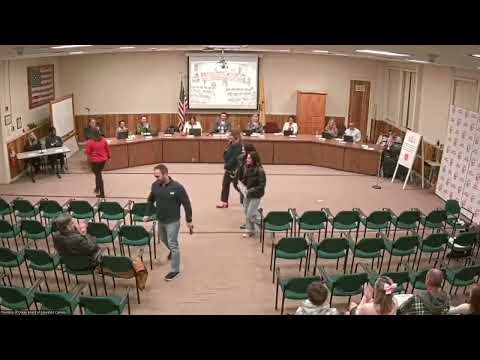
Ocean Township board pauses plan to end virtual public comment after residents push back
Summary
Residents urged the Ocean Township School Board to retain Zoom public comment and to improve student safety; board members said policy changes require two public hearings and no immediate change was made.
The Ocean Township School Board heard more than one hour of public comment on a possible end to virtual (Zoom) public comment and on student safety, and did not move forward with any immediate policy change.
At the outset of public comment, Alex Hayes of Oakhurst told the board that two recent e‑bike accidents involving high‑school students showed the district must do “a little bit more than just signs,” and urged classroom instruction about rules of the road and more parent education. “You all need to do a little bit more than just signs,” Hayes said, adding that removing Zoom comment would “stifle public discourse.”
Remote commenter Dr. Jonathan Shuttman praised the district’s response to a potential SNAP benefits disruption — describing the district’s actions as “an excellent response” — but said the board should investigate long‑term academic performance. Shuttman cited third‑party rankings and asked the board to examine policies such as consolidation of special‑education services, staff development and adoption of research‑based reading instruction to help lower‑performing students.
Keith Chapman, also of Oakhurst, urged the board to continue using Zoom as a collaborative tool. “Why are we going back to the stone age?” Chapman asked, saying virtual attendance allows broader community participation at evening meetings.
Board members responded by stressing procedure and the need for public notice. President McCarthy said there was no policy change presented at the meeting and reminded members that, under board policy, changes to public‑participation rules require two public hearings. “There is no change of policy presented at this meeting,” McCarthy said, and later noted he did not hear much appetite on the board for an immediate change.
Board members differentiated between removing typed chat/text comments and removing spoken virtual comments, with several members suggesting the issues are separate and would benefit from focused consideration. Concerns were also raised about staff capacity to monitor typed comments during presentations and about managing public expectations.
No motion to alter the district’s public comment policy was introduced at the meeting and no vote was taken. The board indicated it would keep the matter on its agenda for further discussion and follow the required public‑hearing process before any policy change.
Next steps: the board did not schedule a vote and asked staff to return with options for separating chat/text comment rules from live spoken virtual comment, and with suggestions for monitoring and personnel needs if the board pursues any change.