
Regional School District 15 board debates school‑construction bond, science‑lab upgrades and second turf field
Get AI-powered insights, summaries, and transcripts
Subscribe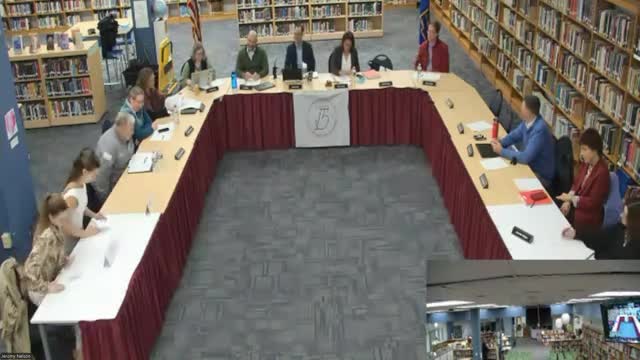
Summary
The Regional School District 15 board reviewed a draft five‑year capital plan, discussed using a construction bond to fund new school construction and upgrades (including science labs and a possible second high‑school turf field), and directed staff to pursue detailed cost estimates and bond‑timing options.
Regional School District 15 board members spent the bulk of their Nov. 24 meeting reviewing a draft five‑year capital plan and weighing whether to bundle several projects into a single school‑construction bond.
Superintendent Joe Mercato walked the board through the district’s capital planning framework, describing two funding buckets—annual operating capital and an educational‑expense/capital reserve account—and stressing that the figures presented are planning estimates. Mercato said the district is prioritizing safety and mechanical systems and that several projects are already in motion: window and pool‑deck replacements, phone‑system and energy upgrades, gym‑floor resurfacing and roofing studies.
Board members focused on two possible bond targets: comprehensive new‑school construction and a set of high‑priority renovations. Mercato said three science‑lab projects were under consideration—two new labs at Rochembau and Memorial and renovation of the high‑school labs—with preliminary cost ranges for high‑school lab work that “can range from $3,400,000 to $7,800,000 depending on need and OSHA compliance.” He emphasized the need for architect and vendor estimates before committing to referendum language.
A separate proposal to add a second turf field at the high school drew repeated questions about timing, cost and maintenance. Board discussion put a rough planning range for a second turf field between $2 million and $6 million; Mercato and staff said firm estimates would require an architect‑led study. Members also noted that turf fields typically have a service life of about 10–15 years and that maintenance equipment and operations are concentrated at the high school, raising logistics questions for any off‑site field.
Several members urged caution about bundling disparate projects into a single referendum. One board member asked whether smaller projects “get lost” if included with a large school construction question; another asked whether a separate, contingent ballot question for the turf field could be drafted so a voter who opposed turf would not be forced to reject the school question. Staff and members discussed economies of scale from including multiple projects on one bond versus the risk that cost overruns on a single item could force other projects to be dropped.
The board also discussed site‑planning work by consultant Tecton: possible construction access-road costs in the $1.2–$1.5 million range, a shared septic solution for paired schools on district property, and the benefits of building on sites the district already owns. Staff said some infrastructure elements (septic and the access road) are likely to qualify for reimbursement but that final determinations would depend on further research.
No binding referendum decision was taken. Board members asked staff to provide more detailed cost estimates, clearer Q&A materials and a pre‑read before any possible directional vote on Dec. 8; staff said January/February would likely be the window to finalize referendum language for a May referendum date. Several members requested site visits to schools currently under construction to see mitigation strategies for continuity of learning during active builds.
The meeting record shows the board moved forward with smaller procedural matters (minutes approvals and financial transfers) but left major bond decisions pending while directing staff to make projects “shovel‑ready” with architecture and cost work.
The board’s next regular meeting is scheduled for Dec. 8, when staff expect to present additional feasibility detail and Tecton will attend to answer technical questions.