Get Full Government Meeting Transcripts, Videos, & Alerts Forever!
Get email alerts on the Open Burning Regulation topic
No spam. Unsubscribe anytime.
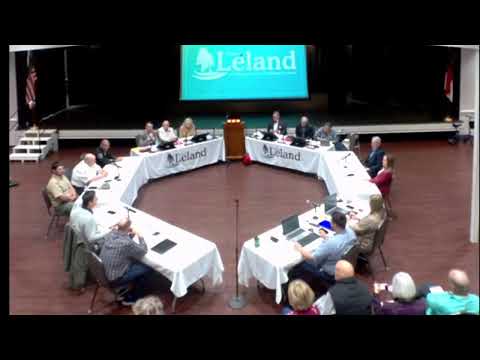
Leland workshop probes legal route to strengthen land‑clearing burn ban as residents report health harms
Summary
At a Nov. 11 Leland town council workshop, staff and state officials explained North Carolina open‑burning rules, setbacks and permitting limits and recommended pursuing Environmental Management Commission certification to give the town stronger enforcement tools; residents urged tougher penalties and local monitoring after recent smoke incidents.
Leland — Town officials, state forestry and air‑quality staff and the town attorney on Nov. 11 outlined how the town could strengthen its ban on land‑clearing open burning while warning that state law limits local authority without Environmental Management Commission (EMC) approval.
The hour‑long workshop included a presentation by Leland Fire Chief Ronnie Hayes and regional forestry and air‑quality representatives who reviewed current state policy on open burning, including the daily forecast system (green/yellow days allow burning; orange/red/purple days prohibit it), statutory setbacks and permit rules. "If it's green or yellow, you can burn," a presenter said while noting forecasts are a daily prediction, not a momentary measurement.
Town Attorney Steve Coggins told the council that municipalities are "creatures of statute" and must show the EMC they can "do something better" than state rules to obtain local authority to regulate smoke more strictly. "If there is no statute that authorizes a town to take a certain action, you probably should assume the town cannot do so," Coggins said, explaining the DEQ director reviews applications and the EMC must certify any local air‑pollution control program.
Presenters summarized technical limits in the state rules: land‑clearing burns generally must be at least 250 feet from a public right‑of‑way and 500 feet from dwellings not on the property; land‑clearing permits for burns over 5 acres require forestry service inspection; off‑site debris movement for burning is restricted and permitted disposal facilities in the region have limited capacity. The presenters also described two types of air‑curtain incinerators (trench burners that require clay soils and above‑ground units) and said those devices still generate smoke and are subject to state approval.
Residents at the workshop repeatedly urged the council to pursue stronger enforcement and penalties after recent burning near Brunswick Forest produced dense smoke. Kim Ohanian, a Brunswick Forest resident, said the smoke "affected a lot of people's health" and called $500 a day "definitely not enough" to deter large developers. Scotty Watson, who said he lives with asthma, told the council he and others had been left "a prisoner in my own home" during smoke events.
State air‑quality staff said their monitoring network measures background air quality and long‑term trends rather than attributing a specific particulate exceedance to a particular burn; they cautioned it is difficult to assign liability based solely on monitor readings because multiple sources and long‑range transport can affect local concentrations. One DAQ representative summarized enforcement as focused on permit compliance and prescribed conditions (setbacks, materials burned, whether material was brought in from another site) rather than on instantaneous particulate measurements: "The open burning rules ... do not consider the level of emissions at any point," the official said.
Council members said the town has already adopted an ordinance (passed Oct. 10) banning land‑clearing open burning and that staff will bring proposed revisions to "bulletproof" enforcement and clarify penalties to the consent agenda at the next regular meeting. Attorney Coggins recommended the town consider a narrowly framed program, clear enforcement standards and regional coordination with neighboring towns and the county to increase the chances of EMC approval.
The council also approved a motion during the workshop to allow additional public commenters. The meeting closed with the town reiterating that the current no‑burn ordinance for land clearing remains in place while staff work on ordinance clarifications and outreach to neighbors and state agencies.
What happens next: proposed ordinance amendments will be placed on the consent agenda at the next regular council meeting; council members signaled intent to pursue regional cooperation and, if appropriate, to submit materials to DEQ/EMC to seek additional local enforcement authority.