Get Full Government Meeting Transcripts, Videos, & Alerts Forever!
Get email alerts on the Property Taxes topic
No spam. Unsubscribe anytime.
Sedgwick County commissioners outline legislative plan to reform property-tax appraisal and appeals
Summary
Commissioners Jeff Flubal (Dist. 2) and Jim Howell (Dist. 5) described a legislative agenda to increase transparency in property-tax bills, shorten appeal times at the Board of Tax Appeals, restore a local hearing officer panel, and reconsider appraiser qualifications to improve perceived fairness.
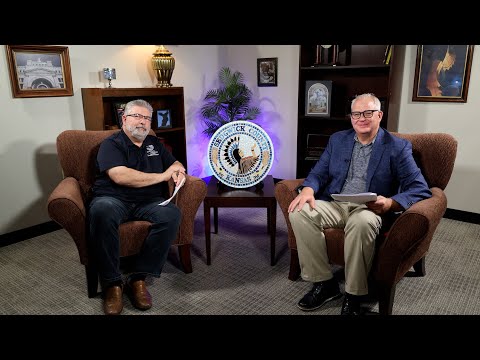
Commissioner Jeff Flubal (District 2) and Commissioner Jim Howell (District 5) on Monday laid out a legislative agenda aimed at addressing homeowner frustrations with property-tax valuations and the appeals process in Sedgwick County.
"It's something that we hear about all the time," Flubal said, introducing the discussion and noting that county leaders want to address valuation consistency and public understanding of how tax dollars are allocated. Howell said homeowners commonly feel "they're being picked on by a system that's broken" and that education about where tax dollars go could reduce frustration.
The commission's proposals include several changes to make valuations and appeals more transparent and speed adjudication. Howell proposed splitting tax bills so taxpayers can plainly see which portion funds state-managed school costs and which portion pays county and local services. "At least you would understand then, my city police, my city library, my local streets, my fire department are paid for with this tax bill, and my schools are paid for with that tax bill," Howell said.
Both commissioners emphasized the backlog and delays in appeals. Flubal said he presented 31 appealed cases to the interim committee on taxation that showed no change through the protest process and said some Board of Tax Appeals (BOTA) cases have waited more than three years. He said the county is pursuing language to require that BOTA hear cases within one year.
Howell urged reinstating a local hearing officer panel (HOP) as an intermediate, binding step before a case goes to BOTA. He described HOP as a local panel that could adjudicate disputes "based on data" presented at a local hearing and resolve many cases without a long trip to the state appeals board.
The commissioners also questioned statutory limits on who may serve as the county appraiser. Flubal cited KSA 19-14-30, which requires three years of mass appraisal experience for eligibility, and both said that requirement narrows the pool of candidates and can exclude people with leadership or broader real-estate experience. Howell said the appraiser position includes substantial management responsibilities and advocated considering leadership qualifications (for example, an MBA) so the office can better engage with the public.
Howell also flagged public perceptions of the appraisal office. "It's almost like their goal is to increase tax revenue," he said, describing how some residents view the office as "cold" and not sufficiently responsive to taxpayers' concerns. Neither commissioner reported a formal complaint or response from the appraisal office during the briefing.
Flubal said the commission briefly considered a public dashboard that would show the number of appeals, outcomes and associated dollar changes but has scaled that idea back while maintaining a commitment to local transparency. Both commissioners invited public feedback and provided contact emails: jeff.blueball@sedgwick.gov and jim.howell@sedgwick.gov.
The discussion did not include motions or formal votes. Commissioners said the changes will be pursued through the county's legislative agenda at the state level and through outreach to relevant state officials and committees. The commission described these items as ongoing work and encouraged residents to submit examples and concerns to the commissioners' offices.