
Sedgwick leaders warn KDOC funding formula would slash local community‑corrections services
Get AI-powered insights, summaries, and transcripts
Subscribe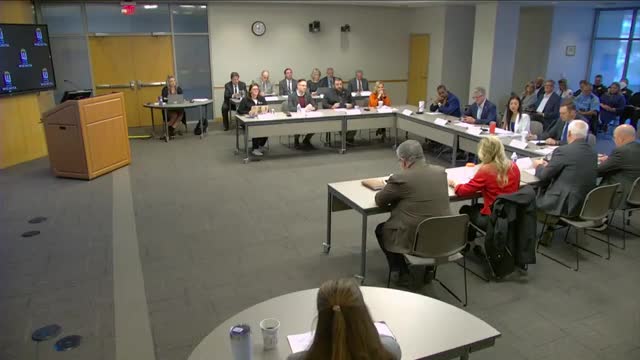
Summary
Sedgwick County officials told Wichita leaders that a proposed Kansas Department of Corrections funding formula would cut the county—s allocation about 38% over three years, risking behavioral‑health programs, about 20 jobs and higher caseloads; county and city leaders said they will seek pauses, legislative fixes and more data.
Sedgwick County officials told a joint city‑county en banc on Oct. 29 that a proposed Kansas Department of Corrections (KDOC) funding formula would sharply reduce the county—s community‑corrections allocation and imperil programs that supervisors say keep people out of prison.
"Doing this work with 40% less budget will be nearly impossible," Laurie Gibbs, deputy director of adult programs for Sedgwick County Department of Corrections, said during a presentation that described intensive supervision, residential treatment, drug and veterans courts, mental‑health‑specialized staff and in‑house cognitive‑behavioral programs.
Gibbs and Director Steve Stonehouse said KDOC—s new formula uses caseload composition and a 40% block of other factors (poverty rate, crime indexes, jurisdiction population and geographic size). Stonehouse told the en banc Sedgwick—s allocation was projected to fall about 38% over three years — roughly $700,000 a year — and that behavioral‑health funding of $685,000 would be cut about 50%. He and county leaders said the reductions would eliminate many programs and about 20 positions over three years.
The county also described operational pressures that make Sedgwick—s caseload heavier than many peers: the department supervises roughly 1,200 individuals at any time, of which about 320 are "courtesy" transfers from other counties. Gibbs said 2023 courtesy‑case data showed 278 transfers; many were presumptive‑prison cases and 75% of closed cases ended for technical violations rather than new crimes.
District Attorney Mark Bennett urged a coordinated local response, noting Sedgwick County accounts for a disproportionate share of person felonies in state sentencing data. "This is just penny wise and pound foolish to me," Bennett said, arguing that cuts to community‑based supervision and treatment will have downstream public‑safety costs.
City council members and county commissioners discussed next steps: requests for KDOC to pause implementation or hold communities harmless while the Community Corrections Act and its funding formula are reviewed; joint letters to state officials; and potential legislative provisos. Mayor and commissioners asked staff for multi‑year juvenile‑firearm booking data and other metrics to use in advocacy.
No formal vote or binding commitment was taken at the en banc. County officials said they had already met with KDOC leadership and planned further meetings with the governor—s office, the South Central legislative delegation and, if necessary, would pursue legislative remedies.
What happens next: county staff and leaders will provide requested data to the mayor and council, continue discussions with KDOC leadership and consider a joint county‑city letter and legislative outreach to seek a pause or hold‑harmless language while the formula and the Community Corrections Act are reexamined.