Get Full Government Meeting Transcripts, Videos, & Alerts Forever!
Get email alerts on the District Finance And Planning topic
No spam. Unsubscribe anytime.
Robbinsdale board orders administration to begin timeline work after Vision 2030 presentation
Summary
After a Vision 2030 team presentation that outlined arts-and-innovation programming, enrollment declines and $216.6 million in estimated deferred maintenance, the Robbinsdale Public School District board voted to direct administration to begin draft timelines for statutory operating debt planning and the districtwide Reimagine 2030 recommendations.
The Robbinsdale Public School District board on Tuesday directed administration to begin work on draft timelines to implement recommendations from a community-led Vision 2030 report and to produce the statutory operating debt (SOD) plan the district must submit to the Minnesota Department of Education.
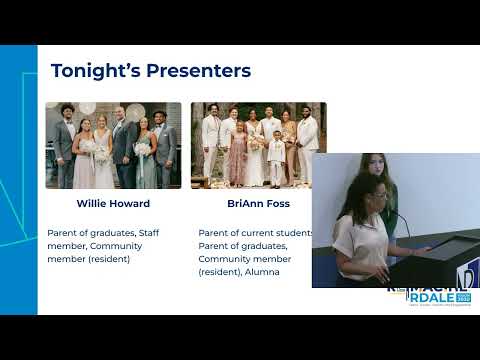
The move followed an 8-month review by a 37-member Vision 2030 advisory team that the presenters said gathered input from about 17,000 stakeholders. The team’s recommendations include adopting a districtwide arts-and-innovation identity, consolidating some buildings (including a recommendation to study a single new high school), and renovating selected facilities to modern standards. "I am a man who runs to the fire, not away from it," Vision team member Willie Howard said during the presentation, summing up the group’s stated motivation.
The recommendations were presented as advisory; the presenters repeatedly said the board and district staff retain decision-making authority over closures, boundary changes and program implementation. "These decisions will require additional intensive effort from district staff who have the specific expertise and experience in working through school closures," a presenter said. Superintendent Terry Stoves and Assistant Superintendent Bob McDowell outlined the administrative steps required to turn the vision into an operational plan, including financial projections, staffing changes, boundary work, and public engagement.
Why it matters: The district is in statutory operating debt tied to a roughly $21,000,000 shortfall, presenters said, and faces continuing enrollment declines. The Vision 2030 report cited a 16% enrollment drop since the 2014–15 school year — about 2,000 students — and projected enrollment of between 9,341 and 9,759 students in the 2030–31 school year, down from 10,253 last year. The team’s facility assessment estimated $216,600,000 in deferred maintenance over 10 years, with $76,300,000 identified as urgent.
Board members asked detailed questions about feasibility, equity, academics and the tax impact of a potential bond. Directors repeatedly pressed presenters to clarify how programmatic goals would translate into classroom practice and how a community vote for a bond would be planned and communicated. Director Kim Holmes asked how staff would be supported operationally if buildings were consolidated; Director Bassett requested more substance on how "innovation" would be anchored to measurable academic outcomes.
Administration’s timeline: Assistant Superintendent Bob McDowell presented a five-phase, multi-year draft concept. Key near-term dates highlighted in the presentation: the board would need to finalize SOD work by the board meeting on Jan. 20 (to enable submission by the statutory deadline of Jan. 31, 2026); facility recommendations intended to affect the 2026–27 school year would need to be published with two weeks’ public notice and allow for a Dec. 8 public hearing and possible vote. McDowell said bond planning could be timed for a November 2026 referendum if the board decides to pursue one.
Action taken: Chair Greta Evan Specker moved "to direct the administration to begin action on the draft timelines outlined for both SOD planning and Reimagine 2030," and Director Renee Bowman seconded. After a voice vote, the chair announced, "Motion carries." The motion directs staff to begin the administrative and planning work described in the draft timeline; it does not finalize any closures, boundary changes, or a bond proposal.
What’s next: Administration and board staff will return with more detailed scenarios, financial projections, and proposed operational steps. The district’s finance advisory committee will develop assumptions for enrollment and revenue modeling this fall, administrators said. Presenters and staff emphasized that detailed closure decisions, transition plans, staffing assignments, and any bond proposal would require further board-level deliberation and public input.
Context and quotes: The Vision 2030 team said magnet programs are an exception to the overall enrollment trend and proposed expanding magnet-style programming districtwide so more students could access arts-and-innovation courses. The report stressed transparency and community trust if the district pursues a bond: "Building trust will be essential," presenters said.
The board did not vote on any specific closure, boundary or bond proposal. Those decisions will require additional administrative work, public hearings and formal board votes before being enacted.
— Contact: Robbinsdale Public School District; report and slide materials were posted to the district website, presenters said.