
Salem School Committee weighs elementary school mergers amid budget gap and equity concerns
Get AI-powered insights, summaries, and transcripts
Subscribe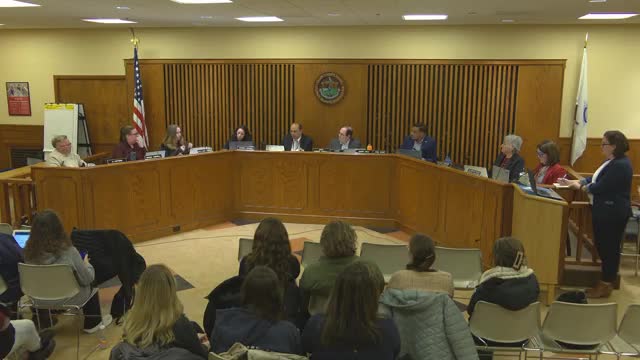
Summary
Consultants presented conservative savings models for elementary reconfiguration as parents, teachers and the district pressed for clarity on impacts to special education, nursing staffing and dual'language programs; no final vote was taken and more public engagement sessions were scheduled.
Consultants advising the district presented multiple elementary reconfiguration scenarios to the Salem School Committee on Dec. 1 as part of efforts to close an emerging budget shortfall. The proposals—ranging from co'locations to full mergers among schools including Carlton, Bentley, Saltonstall and Horace Mann—were framed as conservative estimates that intentionally excluded some possible staff reductions.
Why it matters: The committee is trying to reconcile fiscal pressures with programmatic and equity commitments. Officials warned that delaying decisions could force deeper staffing cuts later, while parents and teachers warned that rushed consolidations risk harming vulnerable students and undermining community trust.
The case for caution: Consultant Sarah told the committee that the financial projections were conservative and did not assume routine classroom teacher reductions, "because we wanted to give you the most conservative estimates as sort of a floor." She cautioned that some scenarios would affect hundreds of students at once. Committee members repeatedly pressed consultants and district staff on potential downstream effects, including whether improved facilities might lead to demographic shifts that could disadvantage Latino and low'income students.
Public testimony highlighted operational and safety concerns. School nurse Jade Bachman urged the committee to "maintain full nursing staffing if a merge occurs," describing legally regulated tasks—medical clearances, medication orders and individualized healthcare plans—that would double clinical workload if two communities are combined. Parent speakers told detailed stories about how smaller school settings had supported neurodivergent students, arguing that mergers could disrupt services and relationships that currently help those children thrive.
District staff emphasized transition planning. Superintendent Zreich and Assistant Superintendent Pauley said a merger, if approved, would be accompanied by a transition team composed of educators, families, students and central office staff, and would include monitoring of attendance, discipline rates and internal assessment data. Pauley and consultants also discussed options such as preserving choice for impacted families and creating phased approaches to program changes, though consultants said phased, multi'year "shrinking" transitions would likely be complex and confusing for staff and families.
Budget context: Pauley flagged a projected personnel deficit of about $700,000 for FY26 and noted district transportation costs for special education (six added wheelchair vans and monitors) are adding pressure to the non'personnel budget. Committee members and consultants linked the reconfiguration analysis to the district's need to create financial headroom while protecting instructional programs.
What happened next: The committee did not vote on a reconfiguration plan. Instead it scheduled further public engagement: an open house on Dec. 6 and a Dec. 8 Q&A webinar, and indicated a deliberation and possible decision could occur at the next posted meeting (Dec. 15). The superintendent encouraged continued public feedback to reconfiguration@salemk12.org.
Ending: The discussion made clear the committee faces a tradeoff between near'term budget pressure and long'term program and equity goals. Members signaled they would continue deliberations with additional data and community input before any motion to merge schools is considered.