Get Full Government Meeting Transcripts, Videos, & Alerts Forever!
Get email alerts on the Curriculum Reading topic
No spam. Unsubscribe anytime.
Pennridge officials recommend one‑year renewal of Being a Reader to bolster grades 3–5 literacy
Summary
Pennridge School District staff recommended a one‑year renewal of Being a Reader (second edition) for grades 3–5, citing alignment with PA Core standards and a one‑year launch cost of about $145,000; the proposal will go to the board for a vote in October.
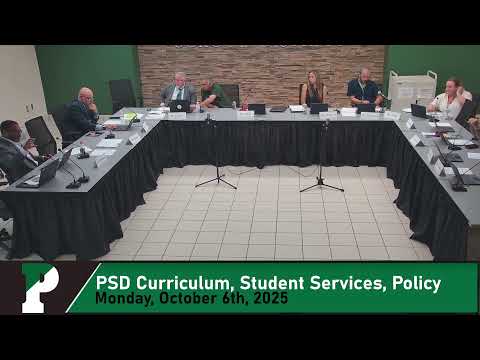
Jennifer Bloom, director of Teaching and Learning for Pennridge School District, told the curriculum committee that staff will present a proposed one‑year renewal of the district’s elementary reading program to the full board in October.
The district is recommending Being a Reader (second edition) for grades 3–5 to replace Making Meaning, which staff said will be discontinued by the vendor. Bloom said the renewal is intended to address specific reading comprehension anchors—ideas and details, vocabulary, craft and structure, and conventions—that have shown weaker proficiency in recent assessments.
Meg Burke, a district supervisor involved in the review, said the program aligns more directly with Pennsylvania’s eligible content and the PA Core standards and includes professional development and scaffolds for multilingual learners. "The being a reader directly addresses these anchors as well as scaffolds to help differentiate and enrich reading programming for students in our classrooms," Burke said.
District staff showed assessment data used to justify the recommendation: fall DIBELS snapshots and cohort STAR results. Burke said a third‑grade cohort's fall DIBELS snapshot showed 69.4% in core or core support. Staff cautioned that statewide LinkIt data also showed declines after districts moved to computer‑based PSSA administration and argued the district’s early adoption of online testing contributed to the score dip.
Staff outlined costs and timing: an estimated first‑year implementation cost of $145,000 (teacher kits, initial professional development), consumable materials in subsequent years estimated at $21,000–$31,000, and online access to assessment and materials for seven years. Burke said the proposed rollout would begin with a district professional learning kickoff in early November and phased implementation through the following spring and summer.
Bloom said the renewal will appear on the October board agenda as the committee’s primary voteable item. The committee discussed alternatives—pilot cycles, additional vendors and the fiscal tradeoffs of a longer pilot—but staff said a renewal shortens the timeline to get an aligned program into classrooms and preserves funding for concentrated professional development.
Next steps: the curriculum committee will forward the renewal proposal, with detailed budget figures and research, to the October board meeting for a formal vote.