
CMH Ottawa County details Access Center, millage-funded navigator program that logged 3,183 services in FY25
Get AI-powered insights, summaries, and transcripts
Subscribe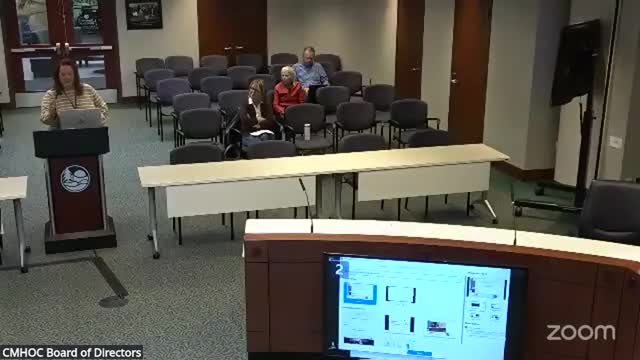
Summary
Access Center director Carrie Korneski described how the agency assesses eligibility, connects residents to services and runs a millage-funded navigator program that provided 3,183 services in FY25; 12% of assessed individuals were deemed not eligible because the requested services were outside CMH's service array.
Carrie Korneski, director of the Access Center and Connections at Community Mental Health of Ottawa County, gave the board an overview of how residents request services, how eligibility is determined and how the millage-funded navigator program operates.
Korneski said Access is the agency’s front door and the sole gatekeeper for eligibility determinations using standardized tools (for adults the LOCUS; for IDD, the Michigan mental health code criteria). ‘‘For fiscal year 2025, our navigators provided a total of 3,183 services, with 1,579 being unique or first time services,’’ she told the board, summarizing program activity from June through September 2025 in the agency’s new electronic record system.
The navigator program: Korneski described navigators as millage-funded staff who provide intensive resource connection and crisis follow-up (including a 24-hour follow-up call after crisis team contact and handwritten outreach cards). Navigators focus outreach on veterans and people experiencing homelessness, working with the LRE veteran navigator, the county veteran department, Gateway Mission and other community partners. Korneski said the program can spend extended time with people to reduce barriers to care and that, ‘‘to my knowledge, we’re the only CMH in all of Michigan who has this program.’’
Eligibility and gaps: Korneski reported that Access completed 595 eligibility assessments in FY25; 521 (about 88 percent) were eligible and 74 (about 12 percent) were not eligible. The most common reason for ineligibility is that the requested service is not in CMH’s service array (examples cited in board discussion included acupuncture and equine therapy). Korneski said those services ‘‘very well could be appropriate’’ for some individuals but are not provided by CMH as a covered service; she noted second-opinion requests are rare.
What the board asked: Directors asked the team to differentiate navigator roles among CMH, county and LRE programs; Korneski said the LRE navigator responds systemwide while the county and CMH navigators focus local outreach and events. Board members also inquired about follow-up after external referrals; Korneski said staff follow up when the individual requests it.
Next steps and data gaps: Korneski acknowledged a reporting gap: crisis stabilization and crisis follow-up data were not yet available in the agency’s new EMR (AUTO) for the June–September reporting window; she said a report is being created and will be shared when ready.
The presentation left the board with concrete performance figures, a plan to clarify navigator roles with partners, and a commitment from staff to supply the missing crisis follow-up report.