Get Full Government Meeting Transcripts, Videos, & Alerts Forever!
Get email alerts on the Transportation And Utilities topic
No spam. Unsubscribe anytime.
Planning board seeks RK&K traffic model, utility clarifications and financial analysis for South Village plan
Summary
Board members asked staff to circulate RK&K's transportation model comments and traffic impact analyses, to clarify water/sewer capacity and reimbursement strategies with Tri River, and to provide a more robust long‑term financial impact analysis before any recommendation on the South Village plan.
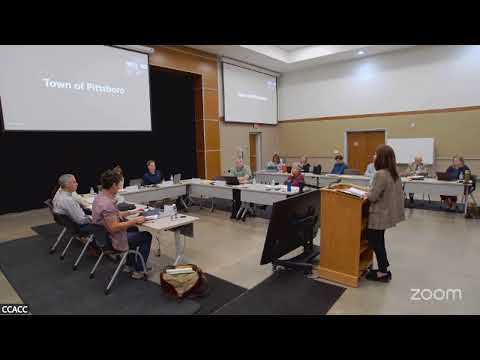
Transportation, utilities and long‑term town costs dominated the Planning Board's follow‑up requests at the Oct. 6 special meeting on the South Village Small Area Plan.
Teresa told the board that the town’s transportation consultant RK&K had received the applicant’s second submittal and expected to deliver comments soon: "They have received the second submittal... they expected to have comments in, I think about ninth or tenth," she said. Board members requested access to the model outputs and to see how proposed corridor changes in the Small Area Plan align with the town’s Comprehensive Transportation Plan.
Board members raised specific corridor questions including potential extensions (Eubanks, Lorax/Lorax Lane and the US‑15 connector) and the effect of dotted lines that extend outside the Small Area Plan footprint. Teresa said the model proposed removing some corridors and that RK&K is reviewing whether those adjustments are justified; she said detailed traffic impact analyses (TIAs) would follow at the section design plan or preliminary‑plat level.
On utilities, Teresa summarized that Tri River provided an initial review and has hired a third‑party consultant to assess water and wastewater capacity. She said some future projects (for example those tied to Western Intake Partners) remain contingent on partner participation and are not finalized: "that's just future planning... that's not that hasn't been approved or anything like that yet." The board specifically asked staff to confirm reserved capacities, any separate agreements between Tri River and Chatham Park, and how developer‑funded infrastructure and reimbursement strategies (forgiveness or credits of impact/connection fees) would affect other ratepayers.
Teresa said development typically pays for its infrastructure and that system development fees and impact fees are mechanisms to fund future capacity expansions. She added the town will request the Tri River consultant report and clarify wording about reimbursement strategies.
Separately, board members asked for a more robust financial‑impact analysis detailing town expenses across a multi‑decade horizon (staff noted internal long‑range capacity planning is underway and that the applicant provided an initial analysis but the board requested greater detail on years 20–50). Staff agreed to gather the requested technical reports and return with documented responses and updated packet materials prior to the next board meeting.